Trader’s Block: Why You Freeze.It was a Tuesday morning in 2019. I had been watching a GBP/USD setup on my MetaTrader 4 chart for almost three hours. The price had cleanly bounced off a key support level. My RSI was showing oversold conditions. The 200 EMA was holding perfectly. My trading plan said BUY — loud and clear.
I just sat there. Mouse hovering over the buy button. Five minutes passed. Then ten. Then the candle closed, the setup was gone, and I watched GBP/USD climb 80 pips without me.
That was the day I first realized I had Trader’s Block. And trust me, I felt absolutely ridiculous — because I had been trading for over six years at that point. This wasn’t supposed to happen to me. But it did. And it probably happens to you too, more than you want to admit.
📌 Key Takeaways
- Trader’s Block is a real psychological condition where you know what to do but cannot execute the trade.
- It is almost always caused by past losses, overthinking, or trading with money you cannot afford to lose.
- Even experienced traders with 10+ years of experience suffer from Trader’s Block regularly.
- Going back to a demo account temporarily is one of the fastest ways to rebuild your confidence.
- Reducing your position size dramatically can break the freeze cycle faster than any mental technique.
What Trader’s Block Actually Is — And What It Is Not
People confuse Trader’s Block with being a bad trader or lacking skill. That is completely wrong. Trader’s Block has nothing to do with your technical ability. You can read charts perfectly, understand risk management, and know three different trading strategies — and still freeze completely when it is time to click that button.
Think of it like this. A professional surgeon knows exactly how to perform a surgery. But after a difficult case goes wrong, they might hesitate before the next one. Their skill did not disappear. Their confidence took a hit. Trader’s Block works the same way.
It is that gap between knowing and doing. Between seeing the setup and taking the trade. Between your logical brain saying “this looks good” and your emotional brain screaming “but what if it goes wrong?”
Trader’s Block is not a skill problem. It is a trust problem — you stopped trusting yourself, your strategy, or both.
I have spoken to hundreds of traders over the years through forums, Telegram groups, and trading meetups in Lahore and Karachi. Almost every single one of them has experienced this at some point. The ones who recovered fastest were the ones who understood what was happening and why.
The Real Causes of Trader’s Block in Forex Trading
Understanding why you freeze is half the battle. In my experience, Trader’s Block almost always comes from one of these five sources:
1. A Recent Big Loss That Broke Your Confidence
This is the most common cause by far. You took a trade, it went against you, and you lost more than you were comfortable losing. Maybe it was one bad trade. Maybe it was a losing streak of five or six trades in a row. Either way, your brain now associates “taking a trade” with “losing money” — and it wants to protect you from that pain.
This is completely normal human psychology. The problem is that trading requires you to keep taking setups even after losses. That is literally how the business works. But your brain does not know that — it just wants to avoid the feeling it experienced last time.
2. Trading With Money You Cannot Afford to Lose
I have seen this destroy more traders than any other single factor. When you deposit rent money, emergency savings, or borrowed funds into your trading account — every single trade feels like life or death. The pressure becomes so intense that making any decision feels impossible.
Good trading requires a relaxed, clear mind. You cannot think clearly when you are terrified of the consequences. If this is your situation, no strategy in the world will fix your Trader’s Block until you fix this first.
3. Analysis Paralysis From Too Many Indicators
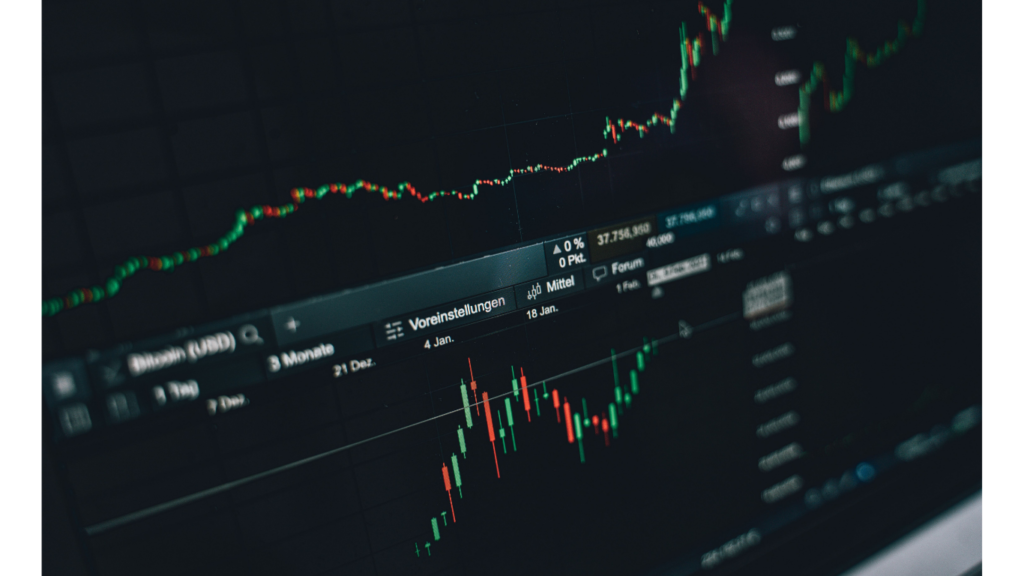
This one hit me hard in my early years. I had RSI, MACD, Bollinger Bands, Stochastic, Fibonacci, and three different moving averages on my TradingView chart — all at the same time. Sometimes three of them said buy while two said sell. What did I do? Nothing. I just kept analyzing and waiting for perfect alignment that never came.
When you have too many signals giving conflicting information, making any decision feels impossible. Your chart becomes noise instead of signal.
4. Social Pressure and Outside Opinions
Trading forums, Telegram groups, and social media can be genuinely toxic for your decision making. You spot a setup, you feel confident — then you open a trading group and see five people predicting the exact opposite direction. Suddenly your conviction disappears completely.
The market does not care about opinions. But your brain does, especially when those opinions conflict with your own analysis.
5. Perfectionism — Waiting for the “Perfect” Setup
Some traders develop such high standards that no setup ever feels good enough to take. They want every indicator aligned, every timeframe confirming, perfect risk-to-reward, ideal market conditions — and they wait and wait until the opportunity is long gone.
Perfectionism in trading is just fear wearing a smarter disguise.
— ✦ —
Signs You Are Experiencing Trader’s Block Right Now
Sometimes traders do not even realize they are stuck. They tell themselves they are “waiting for better conditions” or “being patient.” Here are the real signs that something deeper is going on:
Warning Signs — Check Yourself Honestly
- You watch a setup form, meet all your criteria, and still do not take it
- You enter a trade then exit within minutes with a tiny profit out of fear
- You have not taken a single live trade in over a week despite seeing setups
- You keep changing your strategy every few days because nothing feels right
- You feel physical anxiety — tight chest, sweaty palms — when looking at charts
- You take trades on a demo account confidently but freeze on live
- You spend hours analyzing but zero time actually trading
- You check Forex Factory obsessively before every potential trade
If three or more of those apply to you right now, you are dealing with Trader’s Block. The good news is that it is fixable. I have been through it multiple times myself, and each time I came out the other side with a better understanding of my own psychology.
Pros and Cons of Recognizing Trader’s Block Early
Pros
- You stop bleeding money from emotional, poorly-timed trades made under pressure
- Recognizing it forces you to fix the root cause rather than just the symptoms
- Taking a step back often leads to a completely fresh, clearer perspective on your strategy
- Many traders who work through Trader’s Block come back significantly more disciplined
- It pushes you toward proper position sizing and risk management habits
Cons
- You will miss real setups during the recovery period — that is simply unavoidable
- If you ignore it too long, the freeze can become a permanent habit that kills your trading career
- Recovery takes genuine time and patience — there is no overnight fix
- Some traders use “Trader’s Block” as an excuse to avoid trading altogether and never come back
- Your account sits idle while markets move — opportunity cost is real
How to Overcome Trader’s Block — Step by Step
These are not theoretical tips I read in a book. These are the exact steps I have used myself and have recommended to traders I have mentored. They work — but they require honesty and consistency.
1 Stop Live Trading Immediately — Go Back to Demo
I know this feels like going backwards. It is not. Switching to a demo account for two to four weeks removes all financial pressure and lets you rebuild the habit of actually pulling the trigger. Open TradingView or MetaTrader 4 demo and take every single setup your strategy gives you — no hesitation allowed.
2 Reduce Your Position Size to Almost Nothing
When you go back to live trading, start with micro lots — 0.01 on most brokers like Exness or XM. Risk no more than $1 to $2 per trade maximum. The goal is not profit right now. The goal is rebuilding the action of taking trades without fear. You cannot fix Trader’s Block without actually trading.
3 Simplify Your Chart Completely
Remove everything from your chart except two or three tools you actually trust. My personal setup when recovering was just price action, the 50 EMA, and one support/resistance level. Clean charts produce clear decisions. Cluttered charts produce Trader’s Block.
4 Start a Trading Journal — Paper Version
Before each trade, write down your reason for taking it. After the trade closes, write what happened and how you felt. This is not about tracking profits. It is about understanding your emotional patterns. After two weeks of journaling, most traders can clearly see what is triggering their freeze response.
5 Set a Non-Negotiable Daily Trade Limit
Decide you will take a maximum of two trades per day — no more, no less. Having a limit removes the pressure of feeling like you need to catch every move. It also stops you from overtrading when you finally do start trading again, which is another common mistake after recovering from Trader’s Block.
6 Disconnect From Trading Groups and Social Media
For at least 30 days, stop reading trading groups on Telegram, WhatsApp, or Reddit. Stop following “forex signal” accounts on Instagram. Trade only based on your own analysis. Outside noise is one of the fastest ways to kill confidence in your own judgment — and rebuilding that judgment requires silence from others.
Mistakes Traders Make When Trying to Overcome Trader’s Block
Recovery from Trader’s Block is not always straightforward. These are the mistakes I see traders make that actually make things worse:
Mistake 1 — Switching strategies every week. When you are blocked, your brain looks for a reason to explain the fear. Changing strategies feels productive but it is actually avoidance. You are not fixing the psychology — you are just delaying it with a new distraction.
Mistake 2 — Increasing position size to “make back losses fast.” This is one of the most dangerous moves a blocked trader can make. You are already in a fragile mental state. Adding more risk creates more pressure, which deepens the freeze. Always go smaller, never bigger, when recovering.
Mistake 3 — Treating every missed trade as proof you cannot trade. You will miss setups during recovery. That is part of the process. The traders who recover fastest are the ones who treat each missed setup as information, not as failure. Ask yourself: “Why did I not take that? What was I feeling?” Then write it down.
Mistake 4 — Skipping the demo phase because it feels embarrassing. I have heard traders say “I have been trading for five years, I am not going back to demo.” That mindset keeps them stuck for months longer than necessary. There is zero shame in using a demo account. Professional pilots use flight simulators their entire career. Elite athletes go back to basics. Do the same.
Mistake 5 — Not addressing the financial stress underneath. If you have rent money in your trading account, no technique in this article will fully work until you fix that. Withdraw the money you cannot afford to lose. Deposit only what you are genuinely comfortable losing entirely. This one change alone has broken Trader’s Block for dozens of traders I know personally.
— ✦ —
One Thought Before You Go
Every serious trader I have met — the ones who have been doing this for ten, fifteen, twenty years — every single one of them has had moments of Trader’s Block. It did not end their careers. It taught them something important about themselves.
The traders who never came back were not the ones who experienced Trader’s Block. They were the ones who refused to acknowledge it was happening and kept forcing trades out of ego, frustration, and denial.
You seeing the setup but not taking it is not weakness. It is your brain trying to protect you. The job now is to understand what it is protecting you from — and then address that thing directly, honestly, and patiently.
The market will still be there tomorrow. The question is whether you will be in the right headspace to trade it when you come back.
— ✦ —
Frequently Asked Question
What does “freeze” mean in trading?
In trading, “freeze” means when a trader sees a perfect setup but cannot click the buy or sell button due to fear, past losses, or emotional pressure — the brain locks up at the moment of execution.
How long do stock freezes last?
A stock trading halt usually lasts from 5 minutes to several hours depending on the reason — news-based halts are short while regulatory halts can last days.
Why do trading halts happen?
Trading halts happen because of major news announcements, extreme price volatility, technical exchange issues, or regulatory investigations into a company.
What are the 4 stages of freezing?
The 4 stages are: Trigger (something scares you) → Doubt (you question your analysis) → Hesitation (you delay the entry) → Miss (setup is gone and you watch it without you).
Disclaimer:
This article is for educational and informational purposes only. Nothing written here constitutes financial or investment advice. Forex and crypto trading carry significant risk of loss. Always do your own research and consult a qualified financial advisor before making any trading decisions. Past performance is not indicative of future results.

Hira Ch is a Forex trader and financial content writer specializing in gold, crypto, and currency markets.Based in Lahore, she breaks down complex trading
concepts into simple, actionable insights at ExpertJourny.