Interest Rates and Forex: Understanding Their Impact on Currency Markets

Interest Rates and Forex: Understanding Their Impact on Currency Markets
Interest rates are among the most important economic factors influencing the foreign exchange market. When a central bank changes its interest rate—or signals that a change may be coming—currency prices can react quickly.
For forex traders, understanding the relationship between interest rates and forex markets can provide valuable insight into why currencies strengthen, weaken, or become more volatile.
But the market does not simply react to whether rates go up or down. Traders also consider expectations, inflation, economic growth, employment data, and what central banks may do next.
This article explains how central bank decisions influence forex prices and why interest-rate expectations matter so much.
What Is a Central Bank?
A central bank is a country’s or currency area’s institution responsible for managing monetary policy and supporting financial and economic stability.
Examples include:
- Federal Reserve in the United States
- European Central Bank in the euro area
- Bank of England in the United Kingdom
- Bank of Japan in Japan
- Reserve Bank of Australia in Australia
- Bank of Canada in Canada
One of the main tools available to central banks is the setting of interest rates.
What Is an Interest Rate Decision?
An interest rate decision occurs when a central bank announces whether it will maintain, increase, or reduce its policy interest rate.
A rate decision can influence borrowing costs, saving behavior, investment, inflation expectations, and economic activity.
Because currencies are traded relative to one another, changes in interest-rate expectations can have a direct impact on forex markets.
How Do Higher Interest Rates Affect a Currency?
Higher interest rates can make a currency more attractive to investors under certain conditions.
Suppose traders expect the U.S. Federal Reserve to maintain relatively high interest rates while another central bank is expected to reduce rates.
Investors may view U.S.-dollar assets as potentially more attractive because of the interest-rate difference.
This can increase demand for the U.S. dollar and potentially support USD-related currency pairs.
However, higher interest rates do not automatically guarantee that a currency will rise.
Forex prices depend on expectations and many other economic factors.
How Do Lower Interest Rates Affect a Currency?
Lower interest rates can sometimes reduce demand for a currency because returns on certain interest-bearing assets may become less attractive.
For example, if traders expect a central bank to cut rates significantly, they may adjust their positions before the actual announcement.
This can place downward pressure on the currency.
However, the market response depends on the circumstances surrounding the rate cut.
If a rate reduction is already widely expected, the currency may barely react when the decision is announced.
Why Forex Traders Watch Expectations
One of the biggest mistakes beginners make is focusing only on the actual interest-rate announcement.
Forex markets are forward-looking.
Traders constantly form expectations about what central banks might do in the future.
Consider this example:
The market expects a central bank to raise rates by 0.25%.
The central bank eventually raises rates by exactly 0.25%.
Because the decision was already expected, the currency may not experience a dramatic move.
Now imagine the central bank unexpectedly raises rates by 0.50%.
That surprise could produce a much stronger market reaction because the decision differs from expectations.
Interest Rate Differentials and Forex
An important concept in currency trading is the interest rate differential.
This refers to the difference between interest rates in two economies.
For example, imagine:
- Country A has a policy rate of 5%
- Country B has a policy rate of 2%
The difference is 3 percentage points.
Traders and investors may consider this difference when evaluating currencies and financial assets.
A widening or narrowing interest-rate differential can influence capital flows and currency demand.
Central Banks and Inflation
Interest-rate decisions are closely connected to inflation.
When inflation becomes persistent or rises significantly, a central bank may consider tighter monetary policy.
Higher rates can increase borrowing costs and potentially reduce economic demand.
On the other hand, when inflation falls and economic activity weakens, a central bank may have more room to reduce rates.
For forex traders, this creates an important relationship:
Inflation → Central Bank Policy → Interest Rates → Currency Expectations
This chain can help explain why inflation reports sometimes cause substantial movement in currency markets.
Employment Data Can Also Matter
Central banks do not look at inflation alone.
Employment conditions can influence monetary-policy decisions as well.
Strong employment and wage growth may indicate a resilient economy, while rising unemployment can signal economic weakness.
Because traders use employment data to estimate future central-bank decisions, major employment reports can create significant forex volatility.
For the U.S. dollar, employment reports such as the monthly U.S. jobs report are closely watched by financial markets.
What Happens Before an Interest Rate Announcement?
Forex prices can begin moving before the central bank makes its official announcement.
This happens because traders continuously update their expectations.
For example, if economic data suggests inflation is becoming stronger than expected, traders might begin anticipating higher interest rates.
The currency could strengthen before the central bank actually changes its policy.
This is why traders often monitor:
- Inflation reports
- Employment data
- GDP growth
- Wage data
- Central bank speeches
- Economic forecasts
- Previous policy statements
What Happens During the Announcement?
When the central bank publishes its decision, the market compares the announcement with expectations.
Traders may focus on three major elements:
1. The Interest Rate
Did the central bank raise, cut, or maintain rates?
2. The Policy Statement
What did policymakers say about inflation and economic growth?
3. Future Guidance
What does the central bank suggest about upcoming decisions?
Sometimes the interest rate itself is not the biggest market-moving factor. The accompanying statement or future guidance may have a stronger impact.
Why Central Bank Speeches Matter
Central bank officials frequently speak between policy meetings.
Their comments can provide clues about future monetary policy.
If a central bank official suggests that inflation remains a concern, traders may increase expectations for tighter policy.
If officials express concern about weak economic growth, markets may begin anticipating lower rates.
These changing expectations can influence currency prices even without an official rate change.
How Interest Rates Affect Major Currency Pairs
Interest-rate expectations can influence major currency pairs such as:
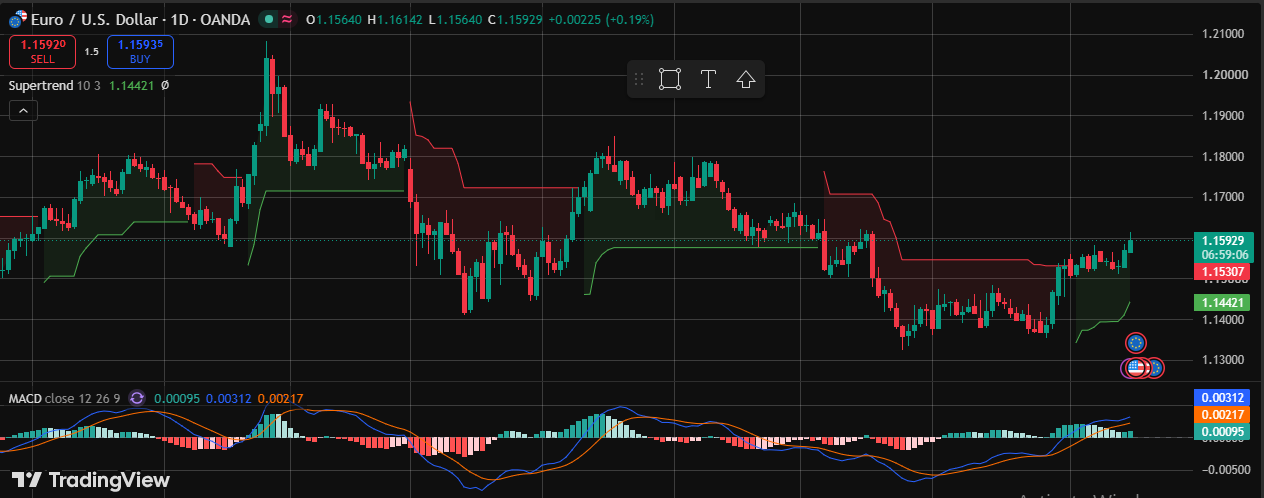
EUR/USD
This pair compares the euro with the U.S. dollar.
Changes in expectations surrounding the European Central Bank and Federal Reserve can influence EUR/USD.
GBP/USD
The Bank of England and Federal Reserve are important monetary-policy influences for this pair.
USD/JPY
Interest-rate differences between the United States and Japan can be particularly important when traders evaluate USD/JPY.
AUD/USD
Expectations surrounding Australian and U.S. monetary policy can influence this currency pair.
The market reaction is never guaranteed because many other factors can affect each pair.
Why Unexpected Decisions Can Cause Sharp Moves
Surprise is one of the major reasons interest-rate announcements can create rapid price movements.
If traders are positioned for one outcome and receive another, they may quickly close existing positions or open new ones.
This can result in:
- Large candles
- Increased volatility
- Wider spreads
- Slippage
- Rapid reversals
For this reason, inexperienced traders should be particularly careful when trading immediately around major central-bank announcements.
Interest Rates and Carry Trading
Interest-rate differences are also associated with a strategy known as carry trading.
In simple terms, carry traders may borrow or hold a currency with a relatively lower interest rate while seeking exposure to a currency with a higher interest rate.
The goal can involve benefiting from the interest-rate differential, in addition to potential currency-price movements.
However, carry trades carry significant risks.
If the higher-yielding currency falls sharply, the currency loss can outweigh the potential interest-rate benefit.
Common Mistakes Forex Traders Make
Ignoring Market Expectations
Looking only at the actual rate decision can lead to an incomplete analysis.
Assuming Higher Rates Always Mean a Stronger Currency
Other economic and political factors can outweigh the impact of higher interest rates.
Trading Immediately During Announcements
Sudden volatility can make entries and exits difficult.
Ignoring Central Bank Guidance
Future policy expectations can be just as important as the current rate.
Using Excessive Leverage
Interest-rate announcements can produce unusually large movements. Excessive leverage can magnify losses.
How to Follow Interest Rate Decisions
Forex traders can monitor an economic calendar for upcoming central-bank meetings and major economic releases.
Before a major announcement, traders can consider:
- What does the market expect?
- What is the current interest rate?
- What economic data has recently been released?
- What have central bank officials recently said?
- Could the decision surprise the market?
- How much risk is appropriate for the trade?
This approach can provide a more complete view than simply predicting whether rates will rise or fall.
Final Thoughts
Central bank interest rates play a major role in the forex market because they influence investment expectations, borrowing conditions, inflation policy, and capital flows.
However, forex prices are driven by expectations as much as actual decisions.
A rate hike that is already fully expected may produce little reaction, while an unexpected change in policy or guidance can cause substantial volatility.
For traders, the key is to understand the bigger economic picture rather than relying on a single indicator.
By following interest-rate decisions, inflation, employment data, central bank communication, and market expectations, forex traders can better understand why currencies move and why volatility often increases around major monetary-policy events.