I still remember the exact moment I thought I had figured out forex.How to Start Forex Trading Explained
It was a Tuesday evening. I had been watching YouTube videos for three weeks straight, I had a demo account open on MetaTrader 4, and I had just made a “profit” of $340 in fake money over two days. I felt like an absolute genius. So I opened a real account, deposited $200, and within four days — gone. Every single dollar.
That wasn’t the worst part. The worst part was that I knew what a moving average was. I knew what support and resistance meant. I had watched enough videos to pass a basic forex exam. But none of that stopped me from making every beginner mistake in the book within 96 hours.
So if you’re reading this because you want to start forex trading and you want to do it right — or at least not repeat what I did — let me actually walk you through this. Not the textbook version. The real version.
First, What Even Is Forex? (The One-Minute Version)
Skip this if you already know. But for anyone who’s still fuzzy on it:
Forex trading is just the exchange of one currency for another. When you travel and swap Pakistani rupees for US dollars at the airport, you’re doing forex. The difference is that in trading, you’re speculating on which direction that exchange rate will move — and you profit (or lose) based on whether you’re right.
The forex market runs 24 hours a day, five days a week, and it’s the largest financial market in the world by volume. Trillions of dollars change hands daily. Banks, governments, corporations, and yes — regular people sitting at their laptops — all participate.
The pairs you’ll see most often as a beginner:
- EUR/USD (Euro vs. US Dollar) — the most traded pair in the world
- GBP/USD (British Pound vs. US Dollar) — more volatile, bigger moves
- USD/JPY (US Dollar vs. Japanese Yen) — popular in Asian trading sessions
- USD/CHF (US Dollar vs. Swiss Franc) — considered a “safe haven” pair
When you’re starting out, stick to EUR/USD. It’s the most liquid, has the tightest spreads, and there’s more analysis and information available for it than any other pair.
Understand What You’re Actually Getting Into
Forex is not a get-rich scheme. It’s also not impossible. It sits somewhere in the middle — a real skill that takes months to develop, where you can genuinely make money if you’re disciplined, but where most beginners blow their accounts because they treat it like gambling.
Here’s a number that surprised me when I first learned it: roughly 70–80% of retail forex traders lose money. That stat comes from regulated broker disclosures — it’s not something people made up to scare you. It’s real.
Does that mean you shouldn’t try? Not at all. It means you should go in with the right mindset. You’re not going to quit your job after three months. You’re learning a skill — like learning to drive, except the stakes involve real money.
The people I’ve seen do well in forex share a few things in common: they’re patient, they take losses without panicking, and they treat every bad trade as information rather than a disaster.
The people I’ve seen blow up their accounts (including my first one) usually shared a different set of habits: they overtrade, they remove stop-losses because they’re “sure the price will come back,” and they double down on losing positions.
Choose the Right Broker — This Matters More Than You Think
Your broker is the platform through which you execute trades. Not all brokers are the same, and a bad broker can cost you money in ways that have nothing to do with your trading skills.
Things to look for in a broker:
Regulation:
This is non-negotiable. Look for brokers regulated by serious authorities — the FCA (UK), ASIC (Australia), CySEC (Cyprus), or if you’re in Pakistan or similar markets, check if they’re registered with a recognized body. Regulated brokers are required to keep client funds separate from company funds, meaning if the broker goes bankrupt, your money is protected.
Spreads:
The spread is the difference between the buy and sell price — it’s how most brokers make their money. Tight spreads (like 0.1–0.5 pips on EUR/USD) are better. Wide spreads eat into your profits on every single trade.
Platform:
Most beginner-friendly brokers offer MetaTrader 4 (MT4) or MetaTrader 5 (MT5). These are the industry standard — they’re free, they’re stable, and there are thousands of tutorials for them. Some brokers also offer their own web platforms, which can be easier to start with.
Minimum deposit:
When I started, I was looking at brokers with $200 minimum deposits. Now there are excellent regulated brokers where you can open an account with $10–$50. This matters because you don’t want to risk your savings while you’re still learning.
A few brokers that are commonly used and generally well-regarded (always do your own research and verify current regulation status):
- Exness — popular in Asian and African markets, regulated, low minimum deposit
- XM — offers a $30 no-deposit bonus for new accounts in eligible countries, good for testing with real money
- IC Markets — known for very tight spreads, good for when you’re more serious
- OANDA — excellent for beginners in regulated markets, great educational resources
Avoid any broker that promises guaranteed profits, signals that “never lose,” or requires you to recruit other members to earn. Those are scams.
Start With a Demo Account — But Don’t Stay There Forever
Every serious broker offers a demo account. It’s a simulated trading environment with fake money but real market conditions. This is where you should spend your first few weeks.
Here’s my honest take on demo accounts: they’re essential, but they also lie to you in one specific way.
Demo trading removes the emotional component. When it’s fake money, you don’t feel fear when a trade goes against you. You don’t feel greed when you’re up 50 pips and want to hold for 100 more. You make decisions calmly and logically. Then you go live and suddenly your hands are shaking when a trade hits your stop-loss, and you start doing irrational things.
So use the demo account to learn mechanics — how to open and close trades, how to set a stop-loss, how to read a chart, how the platform works. Don’t use it to “prove” you’re ready. The real test always happens with real money.
A practical demo approach:
- Spend 4–6 weeks on demo
- Trade the same pair every day (EUR/USD is fine)
- Keep a simple journal: what you traded, why, what happened
- Don’t move to live until you’re profitable for at least 3 consecutive weeks
That last point — three consecutive weeks of profitability — saved me from losing my second deposit. When I finally funded my second account, I had a strategy that had worked consistently in demo. It didn’t work perfectly live, but at least I had a foundation.
Learn One Strategy, Not Twenty
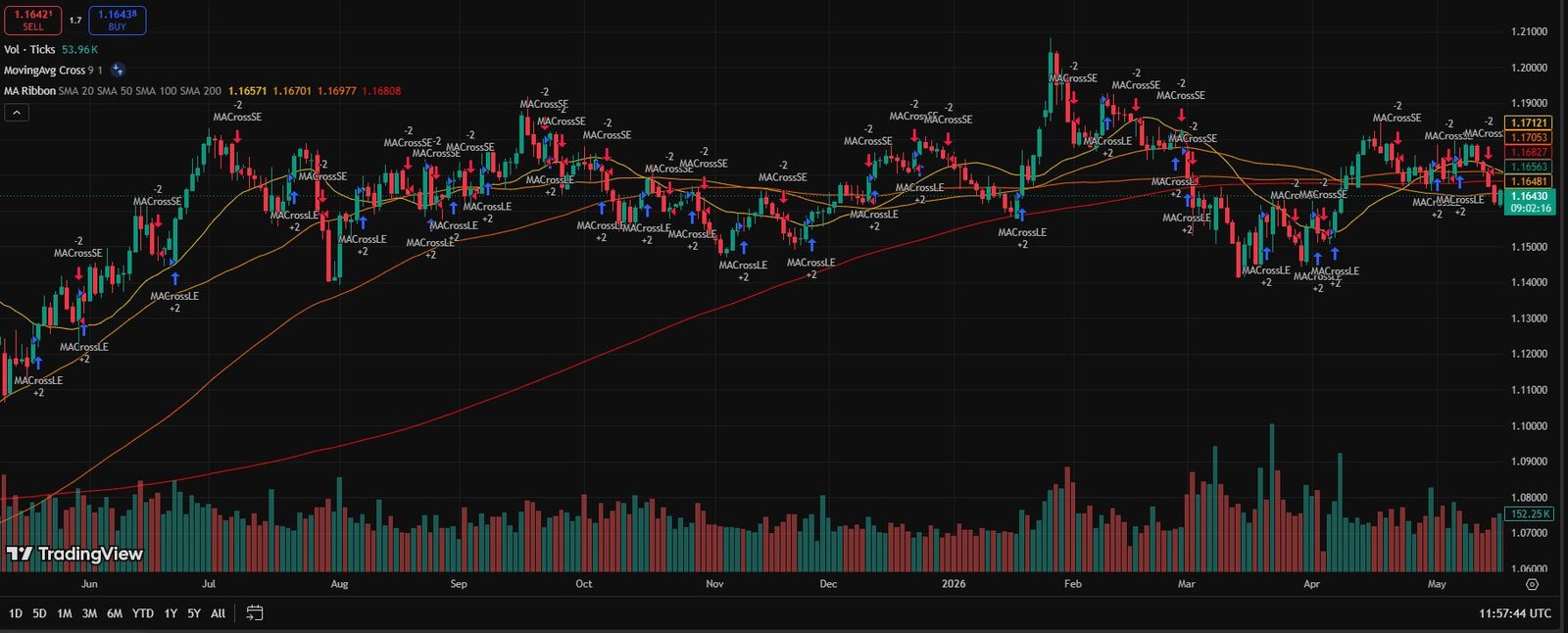
This was my biggest mistake in the beginning. I was constantly chasing the “best” strategy.Moving average crossovers one week, RSI divergence the next, then price action, then supply and demand, then Fibonacci retracement. I was drowning in information and executing nothing properly.
Here’s the thing about forex strategies: almost any strategy can make money if you execute it consistently with proper risk management. The strategy is almost secondary to the discipline of following it.
Pick one and commit to it for at least 90 days. Here are two genuinely beginner-friendly strategies:
Strategy 1: Support and Resistance with Price Action
This is what I eventually settled on and still use. The idea is simple: price tends to bounce off historical price levels. You mark where price has turned around multiple times in the past, and you look for trading opportunities at those zones.
You don’t need any indicators for this — just a clean chart and some patience. Look for a strong level, wait for price to reach it, watch how price behaves when it gets there (does it immediately bounce? does it stall? does it form a reversal candlestick pattern?), and then make your decision.
Strategy 2: EMA Crossover with Trend Confirmation
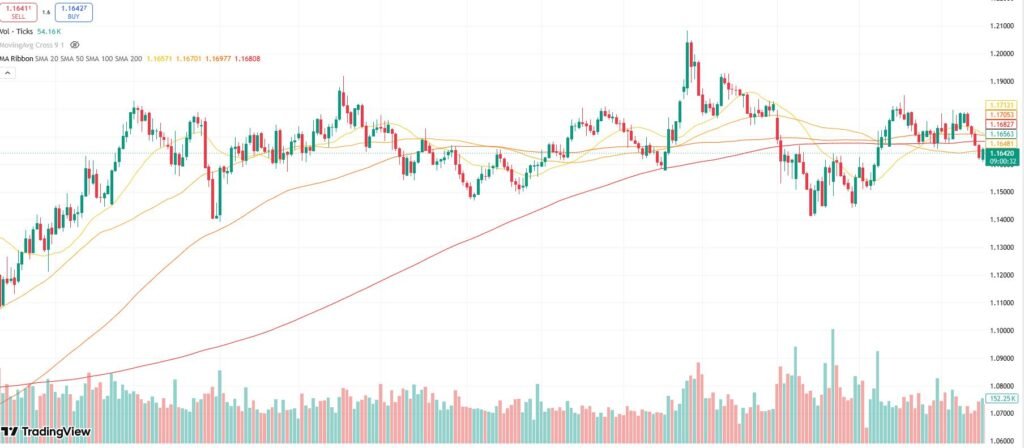
This is more mechanical and easier to follow if you like rules. Use two Exponential Moving Averages — a 9 EMA and a 21 EMA. When the 9 crosses above the 21, it’s a potential buy signal. When it crosses below, it’s a potential sell signal. Add a simple RSI check (buy only when RSI is above 50, sell only when below) to filter out weak signals.
This won’t make you rich. But it’ll keep you on the right side of the trend most of the time, which is exactly what beginners need.
Risk Management Is the Only Thing That Saves Your Account
I know this sounds like boring advice you’ve heard before. But I promise you, the difference between traders who survive their first year and those who don’t is entirely risk management. Not strategy. Not indicators.Risk management.
The rule is simple: never risk more than 1–2% of your account on a single trade.
If you have a $500 account, that means your maximum loss on any one trade should be $5–$10. That sounds tiny. It feels tiny. And that’s exactly why most beginners ignore it and risk 10–20% per trade — and then blow up when they hit three losing trades in a row.
Three losing trades at 2% risk = 6% drawdown. Manageable. You can recover. Three losing trades at 20% risk = 60% drawdown. Now you need a 150% gain just to break even.
Here’s how to apply it practically:
- Decide your stop-loss level first (where is your trade wrong?)
- Calculate the distance in pips from your entry to your stop-loss
- Calculate your position size so that if price hits your stop, you lose exactly 1–2% of your account
Most brokers have a built-in calculator, or you can use a free tool like the Myfxbook position size calculator. Use it for every single trade until it becomes second nature.
Also — and I cannot stress this enough — do not move your stop-loss further away once a trade is open. This is the single most common way beginners destroy their accounts. They set a stop at -30 pips, price gets to -25 pips, and they move the stop to -60 pips because they’re “sure it’ll turn around.” Sometimes it does. More often it doesn’t.
Understand When the Market Moves
Forex runs 24 hours a day, but that doesn’t mean it’s equally active all day. There are three main trading sessions:
- Asian Session (roughly 12:00 AM – 9:00 AM GMT): Quieter, lower volatility. Pairs like USD/JPY are more active here.
- London Session (8:00 AM – 5:00 PM GMT): The most active session. Around 30–35% of all daily forex volume happens here. EUR/USD, GBP/USD move significantly.
- New York Session (1:00 PM – 10:00 PM GMT): The second most active. Overlaps with London from 1–5 PM GMT, which is typically the highest-volatility window of the day.
As a beginner, trade during the London session or the London-New York overlap. You’ll see cleaner moves, better liquidity, and your trades will execute at the prices you expect.
Avoid trading around major news events until you understand how they work. The Non-Farm Payroll report (first Friday of every month, US), central bank interest rate decisions, and inflation data releases can cause prices to spike 50–100 pips in seconds. This can wipe out a small account instantly. Use an economic calendar — Forex Factory (forexfactory.com) is the standard — and mark the high-impact news events. Either avoid trading 30 minutes before and after, or close your open positions.
The Mistakes I Made (So You Hopefully Don’t Have To)
Mistake 1: Trading without a stop-loss. I told myself I’d watch the trade and close it manually if it went wrong. I fell asleep. Woke up 200 pips lower. Never again.
2: Revenge trading. After a bad loss, I immediately opened another trade to “make it back.” That trade also lost. Then another. By the end of the session, I had turned a $40 loss into a $130 loss. When you’re emotional, close the platform and go for a walk.
3: Overtrading. Some days I would take 8–10 trades. I thought more trades meant more opportunities. What it actually meant was more spreads paid, more emotional decisions, and worse results. Now I aim for 1–3 high-quality setups per day.
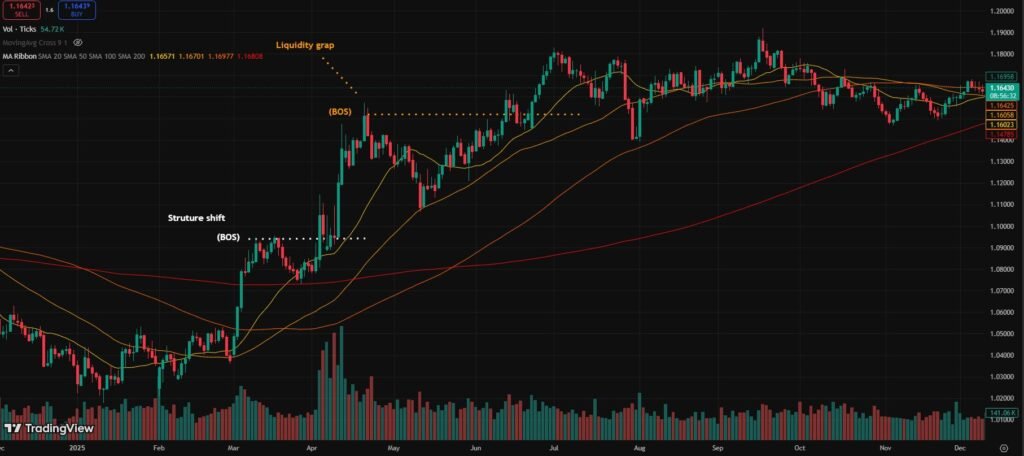
4: Ignoring the higher timeframe. I was trading on the 5-minute chart and wondering why my trades kept failing. The problem was that on the 4-hour chart, I was trading against a clear downtrend. Always check the higher timeframe (daily or 4-hour) before entering on a lower timeframe.
5: Thinking that more indicators = more accuracy. At one point my chart had six indicators on it — two moving averages,RSI, MACD, Bollinger Bands, and a stochastic oscillator. They all gave conflicting signals. I was paralyzed. Clean charts almost always produce better decisions.
The Tools You Actually Need
You don’t need to spend money on fancy software when you’re starting out. Here’s what I actually use:
- MetaTrader 4 or 5 — free, available from your broker, industry standard
- TradingView (tradingview.com) — for charting. The free plan is enough. This is where I do most of my analysis because the charts are cleaner and easier to use than MT4
- Forex Factory (forexfactory.com) — economic calendar, news, and forum. Check this every morning before you trade
- Myfxbook — free trade journal and position size calculator. Connects to your broker account and tracks your statistics automatically
- A physical notebook — seriously. Writing down your trades, your reasoning, and your emotional state when you took them is one of the most underrated habits in trading
That’s it. No paid signals. No expensive courses. No proprietary indicators. Those can come later if you decide to go deeper — but they are not what make the difference in the beginning.
How Much Money Do You Actually Need to Start?
This is the question everyone has but nobody wants to answer honestly.
technical answer: some brokers let you start with $10. You can open a micro account and trade nano lots.
The realistic answer: you’re not going to build meaningful income with $50. A 10% monthly return on $50 is $5. That’s not life-changing.
My recommendation for a beginner: start with whatever amount you can genuinely afford to lose completely without it affecting your life. For some people that’s $100. For others it might be $500 or $1,000. The key phrase is “afford to lose.” Treat your first real-money account as an expensive education — because that’s what it is.
Once you have consistent results over 6+ months — meaning you’re profitable more months than not, your risk management is solid, and your journal shows a clear edge — then you can think about scaling up.
A Realistic Timeline
This is what nobody puts in the YouTube thumbnails:
- Month 1–2: Learning the basics, practicing on demo, losing fake money in new ways
- Month 3–4: Starting to see patterns, developing a strategy, still on demo
- 5–6: Opening a small real account, taking first real trades, experiencing real emotions for the first time
- 7–12: Slowly improving consistency, learning from journal, having good months and bad months
- Year 2+: If you’ve made it this far without quitting or blowing up completely, you probably have something real
Most people quit in month two or three because they expect faster results. The ones who stay curious, keep journaling, and treat every loss as a lesson — those are the ones who eventually figure it out.
One Last Thing
When I lost that first $200, I was embarrassed. I didn’t tell anyone. I quietly opened a new demo account and started over, but this time I actually paid attention to why the trades failed instead of just moving on.
That shift — from “what happened” to “why did it happen and what can I do differently” — is honestly the most important thing you can develop as a forex trader. More than any strategy, more than any indicator, more than any signal service.
The market doesn’t owe you anything. But it will teach you everything if you’re willing to listen.
Start small:
Trade less than you think you should. Keep a journal. Be patient with yourself.
And maybe, just maybe, don’t make your first live trade four days after opening your account at 11 PM on a whim because your demo results were good.
Not that I would know anything about that.
Conclusion:
Forex trading didn’t make me rich overnight. It made me patient.
That first $200 I lost wasn’t wasted — it was the most useful lesson I ever paid for. It taught me that the market rewards preparation, not excitement. Every trader you admire right now — the ones posting their winning trades and talking about financial freedom — they all went through a version of what you’re about to go through. The demo losses, the revenge trades, the sleepless nights watching a position go against them.
Nobody skips that part. The only difference between the ones who made it and the ones who quit is that they kept showing up, kept journaling, kept asking why instead of just what. So if you’re genuinely ready to start this journey — start small, risk less than feels comfortable, and treat every losing trade as a lesson you paid tuition for. The market will still be here tomorrow. Make sure your account is too.
Frequently Asked Questions:
How can a beginner start forex trading?
Open a free demo account on a regulated broker like Exness or XM, practice for 4–6 weeks, learn one simple strategy, then start live trading with $100–$200.
Is $100 enough to start forex?
Yes, $100 is enough to start — but only if you trade micro lots and never risk more than 1–2% per trade, which means risking just $1–$2 per trade.
What is the 3-5-7 rule in forex?
Never risk more than 3% of your account on one trade, keep total open risk under 5%, and your winning trades should be at least 7% bigger than your losing trades.
Can I teach myself forex?
Yes, completely — most successful traders are self-taught through free resources like YouTube, Forex Factory, demo account practice, and keeping a honest trading journal.
All content on this site is for educational purposes only and does not constitute financial advice. Forex trading involves significant risk and is not suitable for all investors. Never trade with money you cannot afford to lose.

Hira Ch is a Forex trader and financial content writer specializing in gold, crypto, and currency markets.Based in Lahore, she breaks down complex trading
concepts into simple, actionable insights at ExpertJourny.