Risk Management in Day Trading.It was a Tuesday. Markets had opened well, I was already up on two trades, and I felt — genuinely felt — like I had figured something out.
So I sized up. Bigger than my usual position. A lot bigger.
The setup looked clean. I’d taken similar trades a dozen times. My confidence was at that dangerous level where you stop double-checking things because you already “know” what’s going to happen.
By 2 PM that day, I had wiped out everything I’d made in the previous three months. Not because the market did something crazy. Not because of some news event I couldn’t have seen coming.
Because I had no plan for what to do if I was wrong.
That afternoon changed how I trade permanently. Not the loss itself — losses happen. What changed me was sitting there realizing I had broken every rule I knew about risk management, and I’d done it consciously, in the moment, because I was feeling good.
That’s the thing about risk management in day trading. You already know most of the rules. The hard part is following them when your emotions are telling you not to.
What Risk Management Actually Means in Real Trading
Everyone talks about risk management like it’s a chapter in a textbook. Keep losses small. Don’t risk more than 1-2% per trade. Use stop losses.
You’ve read that somewhere. Probably multiple times.
But here’s what nobody really explains: risk management isn’t just a set of rules you follow before you enter a trade. It’s a mindset that has to stay active the entire time you’re in a position — and honestly, even when you’re not.
Real risk management is the difference between a bad trade and an account-ending trade. It’s the thing that keeps you in the game long enough to actually get good at this.
The 1% Rule — And Why Most Traders Ignore It
The most basic rule in risk management is the 1% rule: never risk more than 1% of your total trading capital on a single trade.
If you have a $10,000 account, you risk $100 per trade. That’s it.
When I first heard this, I thought it was too conservative. How am I supposed to make serious money risking $100 at a time?
That thinking is exactly backwards.
The 1% rule isn’t about limiting your profits. It’s about making sure no single trade can seriously damage your account. At 1% risk per trade, you’d have to lose 20 trades in a row to lose 20% of your account.
But most traders risk 5%, 10%, sometimes more on a single trade. One bad streak and they’re down 50%. At that point you need a 100% return just to get back to where you started.
The Tuesday I blew three months of profit? I had put roughly 30% of my usable capital into one position. Thirty percent. I didn’t even realize it in the moment because I was so focused on the setup being “good.”
Risk per trade, not conviction in the trade. That’s the shift.
Stop Losses — The Tool Everyone Has and Nobody Uses Properly
Every platform has them. MetaTrader 4, TradingView, Zerodha, Binance — all of them let you set a stop loss in seconds. There’s no excuse not to use one.
And yet traders do all of this:
Move a stop loss further away when price approaches it, because “it just needs a bit more room.”
Not set a stop loss at all because “I’m watching the trade closely.”
Set a stop loss so tight it gets triggered by normal price noise, then wonder why they keep getting stopped out.
Moving your stop loss is almost always a mistake. Your stop is where your thesis breaks down. Moving it means you’re admitting you were wrong but refusing to act on it. Hope is running the trade now, not logic.
“I’m watching the trade” is not risk management. Markets move in seconds. A news spike, a sudden volume surge — you will not always react in time.
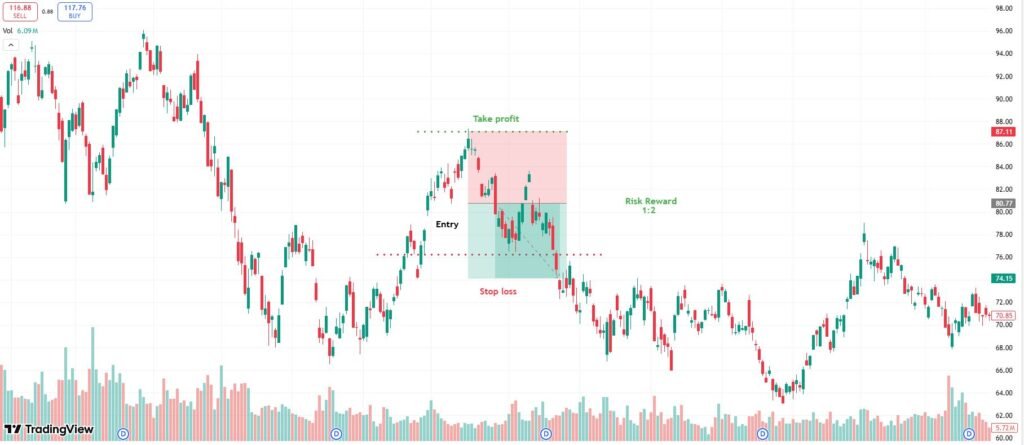
How to place a stop loss correctly: find the level where your original reason for the trade is wrong. That’s your stop. Then calculate position size based on the distance to that stop and your 1% rule.
Position Sizing — The Most Underrated Skill in Trading
Most traders think about which direction to trade. Few think carefully about how much to trade.
Here’s the formula I use:
Position Size = (Account Size × Risk %) ÷ (Entry Price − Stop Loss Price)
Example: $5,000 account. Risking 1% = $50. Buying at $100 with stop at $97. Distance = $3.
Position size = $50 ÷ $3 = 16 shares.
No guessing. No “feeling” about whether this trade deserves bigger size. The math tells you.
On TradingView this is built into the trading panel. On MetaTrader, free lot size calculators are available online — takes 10 seconds.
This one habit forced me to think about my stop before my entry. You can’t calculate size without knowing where you’re wrong first.
The Daily Loss Limit — A Rule That Saved My Account More Than Once
Mine is 3% of my account in a single day. Hit that, everything closes, trading stops. No exceptions.
This sounds simple. Following it is genuinely difficult.
Because when you’re down 2.5% on the day, the urge to make it back is overwhelming. That “one more trade” to recover is almost always the worst trade of the day — made under pressure, emotionally, with desperation instead of logic.
Revenge trading is real. And it doesn’t just happen after big losses. It happens after any loss that stings.
I know traders who blew their accounts not on bad setups — but on the fifth or sixth trade of a day where they should have stopped at the second.
Three percent daily limit. Hard stop. No negotiating with yourself.
Risk-to-Reward Ratio — Only Take Trades That Make Sense Mathematically
If you’re risking $100, what’s your target?
If the answer is $80 — stop. That’s negative risk-to-reward. Even with a 60% win rate, you’ll lose money over enough trades.
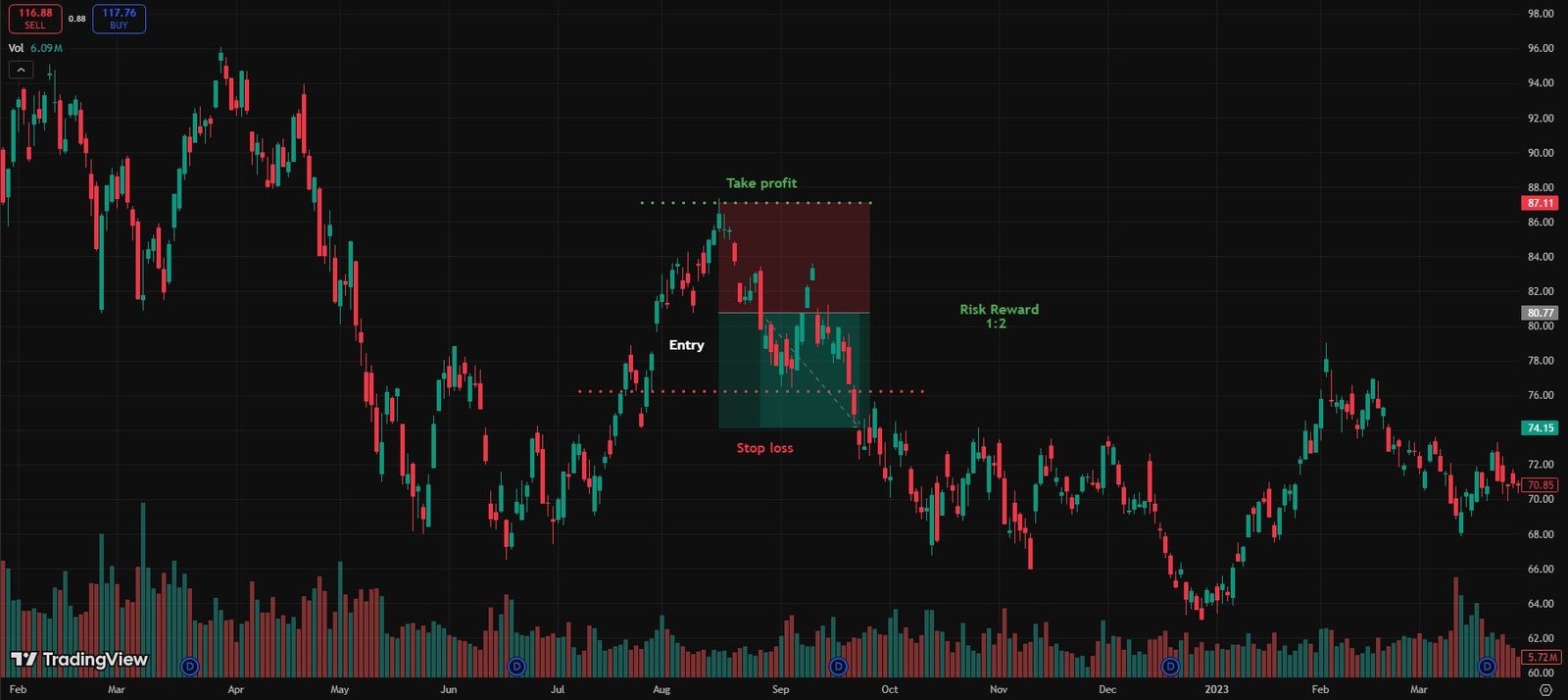
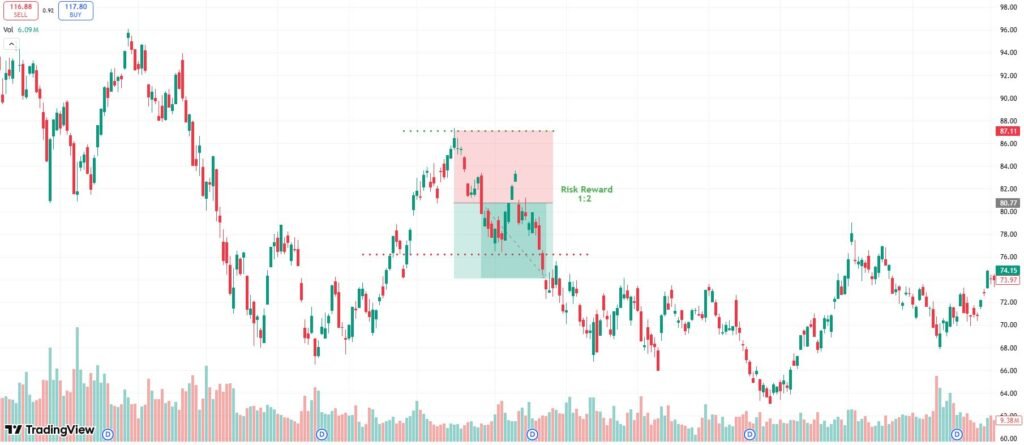
Minimum 1:2. Risk $1 to make $2. At that ratio you only need to be right 40% of the time to break even.
I once went through three months of trades in my journal. Roughly a third had a risk-to-reward below 1:1. I was risking more than I stood to gain — on trades I was choosing to take.
Before every trade now: where is my stop, where is my target, what is the ratio? Below 1:2, I don’t take it. Doesn’t matter how good the setup looks.
Overtrading — The Silent Account Killer
Choppy market. Nothing setting up. Two hours, no trade. That restlessness is dangerous.
Every unnecessary trade costs you commission at minimum. But worse — trades taken out of boredom are low quality. Forced setups have lower win rates and drag down your monthly numbers in ways that are hard to see trade-by-trade.
The discipline of not trading is a real skill. Some of my best weeks involved only 2-3 trades because conditions weren’t right for more.
Quality over quantity. Always.
Real Mistakes I’ve Made
Sizing up after a winning streak. Four good trades and I’d think I was “in flow.” Then one bad trade erased multiple wins because I’d scaled up.
Trading the first 15 minutes of open. Volatile, wide spreads, false moves. I now watch the first 15-30 minutes before entering anything.
Ignoring correlation. Once had three positions that were all essentially the same trade — different instruments, all tied to USD strength. When that one factor moved against me, all three went against me simultaneously. I thought I was diversified. I wasn’t.
Not journaling. Kept trades “in my head” for months. When I finally started logging everything in a spreadsheet, patterns became visible that I’d completely missed. Bad habits hide in memory. They show up clearly in data.
The Tools I Actually Use
TradingView — charting, alerts, reviewing setups. Free version handles most of what you need.
MetaTrader 4 — forex execution. Stop loss and take profit fields on every order. No excuse not to fill them.
Google Sheets — simple trade journal. Date, instrument, direction, entry, stop, target, outcome, notes. Review every Friday.
Forex Factory — economic calendar. Before every session I check what news is coming. High-impact events can spike price through your stop instantly.
Pre-Trade Risk Checklist — 6 Steps, 60 Seconds
Step 1: Where is my stop loss? Based on the chart — not on what I can afford to lose.
2: Where is my target? Is the risk-to-reward at least 1:2?
3: What is my position size? Run the formula.
4: Have I already hit my daily loss limit?
5: Is there major news in the next 30 minutes?
6: Am I taking this trade because the setup is genuinely good — or because I’m bored, frustrated, or chasing?
That last question is the most important. And the hardest to answer honestly.
Mistakes to Avoid
move a stop loss to avoid being stopped out — only move it to lock in profit as trade goes your way.
trade without a pre-set daily loss limit.
the size a position based on how confident you feel — size it based on math.
skip the journal — patterns it reveals are worth more than any paid course.
Never trade the open without waiting for the market to settle.
The Only Edge That Doesn’t Expire
Risk management won’t make trading exciting. Done properly, it makes trading feel almost boring — and that’s exactly the point.
The traders I know who’ve been consistently profitable for years don’t have secret indicators or magic strategies. They have boring, consistent risk management that keeps them in the game through the bad stretches.
Markets will humble you. Every trader at some level has a day that reminds them the market doesn’t care about confidence or track record.
What separates the ones who recover from the ones who quit isn’t skill. It’s whether they had a system protecting them when things went wrong.
Build that system before you need it. Because the day you need it, you won’t have time to build it.
Frequently Asked Questions
Why do 90% of day traders fail?
Because they trade without a plan, ignore stop losses, and let emotions drive decisions. Overtrading and poor position sizing finish off the rest.
What are the 7 types of risk management?
Avoidance, reduction, sharing, retention, transfer, diversification, and hedging. In trading, reduction and hedging matter most.
What are the 5 C’s of risk management?
Culture, Compliance, Communication, Controls, and Contingency. These keep risk structured and manageable at every level.
What are the 4 types of risk?
Market risk, liquidity risk, operational risk, and credit risk. Day traders mostly deal with market and liquidity risk daily.
Disclaimer:
This article is for educational purposes only and does not constitute financial or investment advice. Day trading involves significant risk of loss. Always do your own research and consider consulting a qualified financial advisor before making any trading dec

Hira Ch is a Forex trader and financial content writer specializing in gold, crypto, and currency markets.Based in Lahore, she breaks down complex trading
concepts into simple, actionable insights at ExpertJourny.