Forex Position Sizing and Risk Management.I lost $1,800 in eleven days back in 2022. Not because my strategy was bad. Not because I couldn’t read charts. I lost it because I was putting the same lot size on every single trade, whether my stop loss was 15 pips away or 60 pips away.
Nobody told me that was the problem. I thought I needed a better indicator, a better strategy, maybe a better broker. Turns out I needed fifth-grade math and about twenty minutes of homework before every single trade.
That’s what position sizing actually is. It’s not glamorous. It’s not going to give you a signal that says “buy here, sell here.” But it’s the one thing that decided whether I stayed in this game long enough to actually get good at it.
Why I Ignored This For Way Too Long
When I started trading forex, I was obsessed with entries. Where do I get in? What candlestick pattern do I wait for? Which moving average crossover actually works?
Nobody talks about how much you should risk. And if they do, it’s usually a throwaway line like “risk 1-2% per trade” with zero explanation of how that number connects to your lot size or your stop loss.
So I did what most beginners do. I picked a lot size that “felt right” — usually 0.10 lots because that’s what I saw in some YouTube video — and used it on every trade regardless of the setup.
Some trades had a tight 10-pip stop. Others had a wide 50-pip stop because the pair was choppy. Same lot size on both. That means my actual dollar risk was jumping around from trade to trade without me even realizing it.
I didn’t understand this until I sat down one night after a losing streak and actually calculated what I’d risked on each trade. The numbers were all over the place. One trade I’d risked $40. Another, I’d risked $220. I never chose those numbers on purpose. My lot size chose them for me.
The Moment It Clicked
I was trading EUR/USD on a pullback setup. Nothing fancy — just waiting for price to retest a broken resistance level, which is a setup I still use today (I actually wrote about how I read charts for this kind of setup in my intraday trading chart guide if you want the visual side of it).
My stop loss on that trade was 45 pips away because the pair was volatile that week. I used my usual lot size. The trade hit stop loss. I checked my account — I’d lost $312 on a $5,000 account. That’s over 6% on one trade.
I sat there doing the math wrong for years and never noticed because I never lost that big on one single trade before. That was the wake-up call.
I opened Excel (yes, just plain old Excel, nothing fancy) and built myself a simple sheet: account balance, risk percentage, stop loss in pips, and it would spit out the lot size I should actually use. That spreadsheet changed how I traded more than any strategy ever did.
What Position Sizing Actually Means
Position sizing is deciding how many lots (or units) to trade based on three things:
- How much money you’re willing to lose on this specific trade
- How far away your stop loss is
- The pip value for the pair you’re trading
That’s it. It’s not about “feeling confident” in a setup and going bigger. It’s a calculation you do before you enter, every single time, regardless of how sure you are.
Here’s the formula I use, written the way I actually think about it:
Risk amount (in dollars) ÷ (Stop loss in pips × pip value) = Lot size
Let’s say I have a $5,000 account and I want to risk 1% per trade. That’s $50. My stop loss is 30 pips away on EUR/USD, where pip value for a standard lot is roughly $10 (varies slightly by pair and account currency).
$50 ÷ (30 × $10) = 0.166 lots
So I’d round down to 0.16 lots, not 0.10 lots because “that’s what I always use,” and not 0.20 lots because “I feel good about this one.”
If you don’t want to do this math by hand every time (I didn’t, after a while), you can use a position size calculator — I built one for exactly this reason after getting tired of my own spreadsheet.
The 1% Rule Isn’t Sacred, But It’s a Good Starting Point
Everyone throws around “risk 1-2% per trade” like it’s gospel. Here’s what I actually learned after two years of trading live: the number matters less than being consistent with it.
I know traders who risk 0.5% per trade and are perfectly profitable because they take a lot of trades with a solid edge. I know traders who risk 2% because their strategy has a higher win rate and wider stops. Neither is wrong.
What’s wrong is switching your risk percentage based on how you’re feeling. Risking 1% after three losses, then bumping to 4% because “this one feels like a winner” — that’s how the $1,800 disappeared in eleven days. It wasn’t one bad trade. It was inconsistent sizing across ten mediocre ones.
I settled on 1% for a long time when my account was smaller, then moved to 1.5% once I had more consistent results tracked over a few hundred trades. I didn’t guess that number. I looked at my trading journal (I use a simple Google Sheet, nothing complicated) and saw my average win rate and average reward-to-risk ratio, then picked a percentage that wouldn’t wreck me during a normal losing streak.
How I Actually Calculate This Before Every Trade
Here’s my real process, step by step, exactly how I do it before clicking buy or sell:
1: Know your account balance right now, not last week.
If your balance changed because of open trades or a recent win/loss, use the current number. I check this in my MetaTrader 4 terminal before every trade.
2: Decide your risk percentage for this trade.
For me it’s usually 1-1.5%. Some setups I’m less confident in, I drop to 0.5%.
3: Mark your stop loss based on the chart, not your risk tolerance.
This is the part people get backwards. Your stop loss should go where the setup is invalidated — below a support level, above a swing high, wherever the trade idea is actually wrong. Don’t move your stop closer just so you can use a bigger lot size. I made this mistake early on and it cost me trades that would’ve hit take profit if I’d given them room to breathe.
4: Calculate pip distance from entry to stop.
If I’m buying at 1.0850 and my stop is at 1.0820, that’s 30 pips.
5: Plug it into the formula or calculator.
Risk amount ÷ (pips × pip value) = lot size.
6: Round down, not up.
If the math gives you 0.23 lots, use 0.20 or 0.22 depending on your broker’s minimum increment. Rounding up “just a little” adds up over hundreds of trades.
This whole process takes me maybe 90 seconds now. In the beginning it took ten minutes and I skipped it half the time because I was impatient. That impatience is expensive.
Mistakes I Made (So You Don’t Have To)
1: Using the same lot size regardless of stop loss distance.
Already covered this one — it was my biggest and most expensive lesson.
2: Widening my stop loss to “give the trade more room” after entering.
This is moving the goalposts after the fact. If I already calculated my position size based on a 30-pip stop, and then I move the stop to 50 pips because price is going against me, my actual risk just increased by over 60%. I didn’t account for that. This alone caused two of my worst losing days.
3: Risking more on trades I was “sure” about.
I was sure about a lot of trades that lost. Confidence isn’t a risk management input. Your edge, tested over time, is.
4: Not accounting for spread and commission in the calculation.
On tighter stops (under 15 pips), spread can eat a noticeable chunk of your intended risk. On a pair with a 2-pip spread and a 10-pip stop, that’s 20% of your stop loss just in spread. I started factoring this in on scalping-style trades after noticing my actual losses were consistently a bit bigger than calculated.

5: Ignoring correlation between open trades.
I once had EUR/USD long and GBP/USD long open at the same time, each risked at 1%. Felt like 2% total risk. Because those pairs move together a lot of the time, my actual exposure was closer to a single 1.7-1.8% risk trade. Correlated pairs stack risk in ways that aren’t obvious until you’ve been burned by it.
How Position Sizing Connects to Risk Management as a Whole
Position sizing is one piece of risk management, not the whole thing. The other pieces that actually matter in practice:
Daily and weekly loss limits. I stop trading for the day after losing 3% total, regardless of how many trades that took. Some days that’s one trade. Some days it’s four small ones.
Reward-to-risk ratio per trade. I don’t take trades below a 1:1.5 ratio anymore. Early on I took plenty of 1:1 trades and even some worse than that, chasing setups that “looked good.” A losing streak with 1:1 trades and a 50% win rate gets you nowhere. You need the math on your side.
Journaling every trade with the reason for entry and exit. This is honestly what showed me my sizing mistakes in the first place. Without a journal, you’re guessing about your own patterns.
Not overtrading during drawdowns. After a losing streak, the temptation to “make it back” with a bigger position is real. This is exactly when position sizing discipline saves you from turning a 5% drawdown into a 20% one.
A Real Example From My Trading Journal
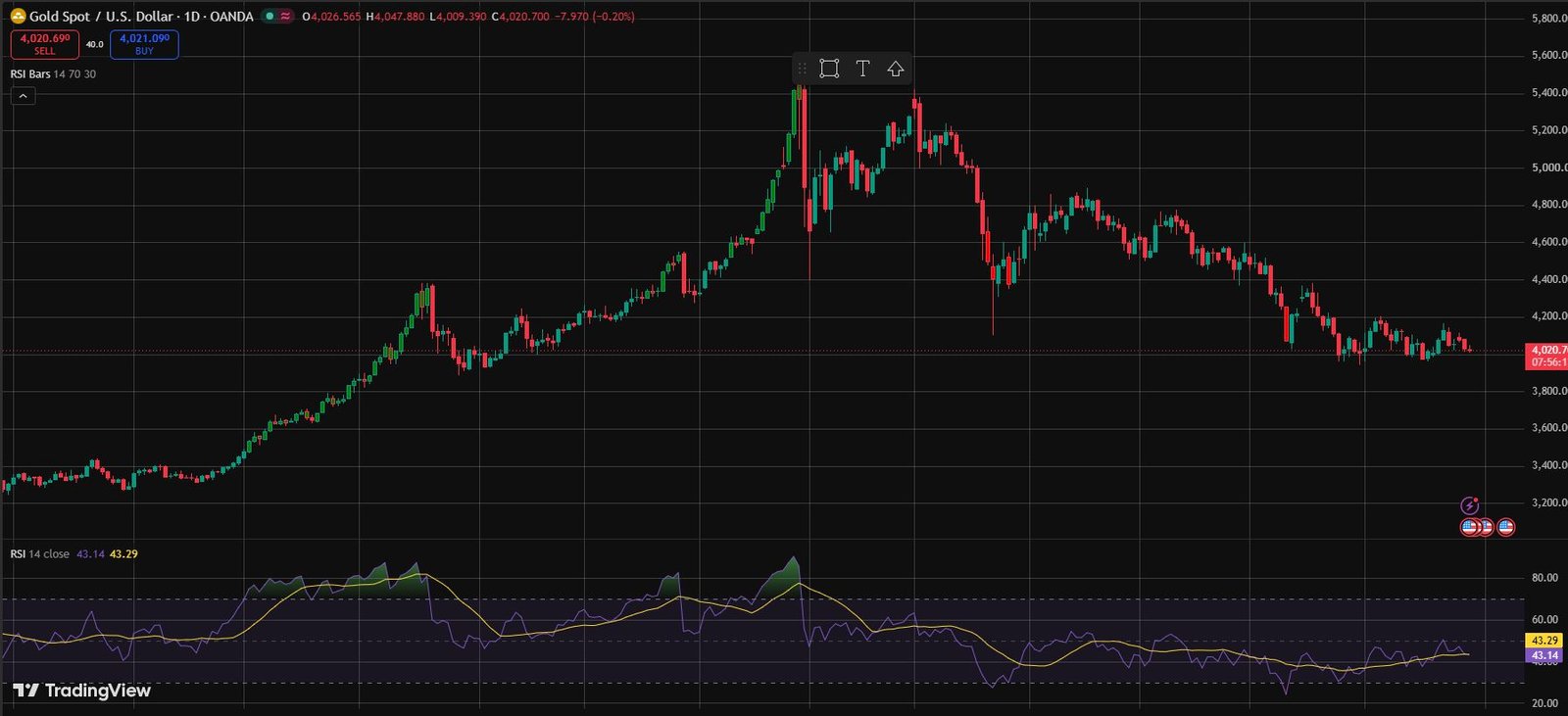
March 2023, trading gold (XAU/USD). Account balance $8,200. I saw a setup on the 4-hour chart — a retest of a broken trendline with a bullish engulfing candle. Good setup, nothing extraordinary.
Stop loss: 8 dollars away (gold moves in dollar terms, not pips, so the calculation is a bit different — I calculate based on dollar movement per lot size instead of pip value).
Risk: 1% of $8,200 = $82.
Gold at the time moved roughly $1 per 0.01 lot per pip equivalent (this varies by broker, so I always check my broker’s specific contract specs before assuming).
I sized the position so that an $8 move against me equaled roughly $82 in loss. Trade hit take profit at a 1:2.2 ratio. Gained $180. Small win, properly sized. Nothing exciting to look at, but that’s what consistent trading actually looks like most of the time — not the dramatic wins people post screenshots of.
Tools I Actually Use
- MetaTrader 4/5 for charting and placing trades with calculated lot sizes
- A basic Google Sheets journal tracking entry, stop, position size, result, and notes on why I took the trade
- A position size calculator for quick math when I don’t want to open my spreadsheet mid-session
- My broker’s margin calculator to double check I’m not over-leveraging when trading multiple pairs at once
None of these are complicated or expensive. The tool matters less than actually using it every time, not just when you remember.
What I’d Tell Someone Starting Out Today
Don’t skip this step because it feels boring compared to finding the “perfect” entry. I spent my first year focused entirely on entries and indicators while ignoring sizing, and it nearly ended my trading before it really started.
Pick a risk percentage you can live with even during a string of five losses in a row (because that will happen, statistically, more often than you’d expect). Calculate your lot size before every trade, not after you’ve already decided how excited you are about it. And track your trades so you actually know if your risk percentage matches your results, instead of guessing.
Position sizing isn’t the exciting part of trading. It’s the part that decides whether you’re still trading in two years or whether you’ve quit after your account got wiped by three bad weeks. I’d rather be boring and still in the game.
Frequently Asked Question
1. Position size calculator
This tool takes your account balance, risk percentage, and stop loss (in pips), then tells you exactly how many lots to trade so your risk stays consistent on every trade.
2. Risk management in forex calculator
This calculator works out your total risk exposure (in dollars or as a percentage), based on lot size, entry, and stop loss, so you’re not trading blindly.
3. Margin calculator forex
A margin calculator shows how much margin (collateral) your account needs to open a position, based on lot size, leverage, and the currency pair.
4. How to calculate risk management in trading
Decide your risk percentage (usually 1-2%), set your stop loss in pips, then use the formula [Risk amount ÷ (Stop loss pips × Pip value)] to get your lot size — that’s the core risk management calculation.
Disclaimer:
This article is for educational purposes only and does not constitute financial advice. Forex, gold, and CFD trading carry a high level of risk and may not be suitable for all investors. Past performance is not indicative of future results. Always do your own research and consider consulting a licensed financial advisor before trading.

Hira Ch is a Forex trader and financial content writer specializing in gold, crypto, and currency markets.Based in Lahore, she breaks down complex trading
concepts into simple, actionable insights at ExpertJourny.