What is Revenge Trading.I was up 340 pips on a Thursday.
Three clean trades. All planned. All executed properly. I had followed my rules, been patient, and the week was shaping up to be one of my best in months.
Then Friday morning happened.
I took a trade on EUR/USD that I had no business taking. The setup wasn’t there — I knew it wasn’t there — but the market had been moving and I didn’t want to sit out. The trade stopped out in 40 minutes. Down 80 pips.
Fine. Annoying, but fine. Losses happen.
Except I didn’t stop there.
I immediately opened another trade. Same pair. Bigger size this time — because I needed to “make back” those 80 pips quickly. That trade also stopped out. Now I was down 200 pips from my Friday entries alone.
Still didn’t stop.
By 2 PM I had taken six trades. Lost five of them. What had been a 340 pip week turned into a 180 pip loss for the week overall. A complete reversal of a genuinely good performance — wiped out in a single Friday afternoon.
I sat there staring at the screen feeling something I can only describe as a combination of rage and shame.
That was the day I understood what revenge trading actually is. Not as a concept. As a lived experience that took real money from me and left me feeling worse than any single loss ever had.
What Revenge Trading Actually Is
Revenge trading is when you take trades not because the setup is good — but because you’re trying to recover from a loss. Emotionally, not logically.
The name is accurate. You’re literally trying to get revenge on the market. The market took money from you and you want it back. Now. Immediately. The idea of closing your platform for the day and accepting the loss feels genuinely unbearable.
So you trade again. And again. Usually with bigger size because you need to recover faster. Usually on worse setups because you’re not analyzing — you’re reacting.
The market doesn’t care. It doesn’t know you’re angry. It doesn’t owe you anything. Every trade you take in revenge mode is evaluated by the market on exactly the same terms as every other trade — and when your emotional state is running the show, those trades almost always lose.
Revenge trading is not a beginner problem. It’s a human problem. I’ve watched experienced traders with years of profitable history blow up in revenge spirals. The pattern doesn’t care how long you’ve been trading. It waits for a bad enough loss, a bad enough day, and then it shows up.
Why It Happens — The Psychology Behind It
Understanding revenge trading means understanding what a loss actually does to your brain.
Studies on trading psychology consistently show that losses feel roughly twice as painful as equivalent gains feel good. Losing $500 hurts more than winning $500 feels good. This isn’t weakness — it’s how human brains are wired. Loss aversion is one of the most documented phenomena in behavioral economics.
When you take a loss in trading, especially an unexpected one, your brain experiences it as a threat. Stress hormones release. Your thinking shifts from calm and analytical to reactive and urgent.
In that state, the most rational thing — accepting the loss, closing the platform, moving on — feels impossible. The irrational thing — trading again immediately to make it back — feels urgent and necessary.
This is why telling yourself “just don’t revenge trade” doesn’t work in the moment. The advice is logically correct and emotionally useless. When the feeling hits, logic isn’t in charge.
What actually works is building systems and habits before the feeling hits — because in the moment, it’s too late to think clearly.
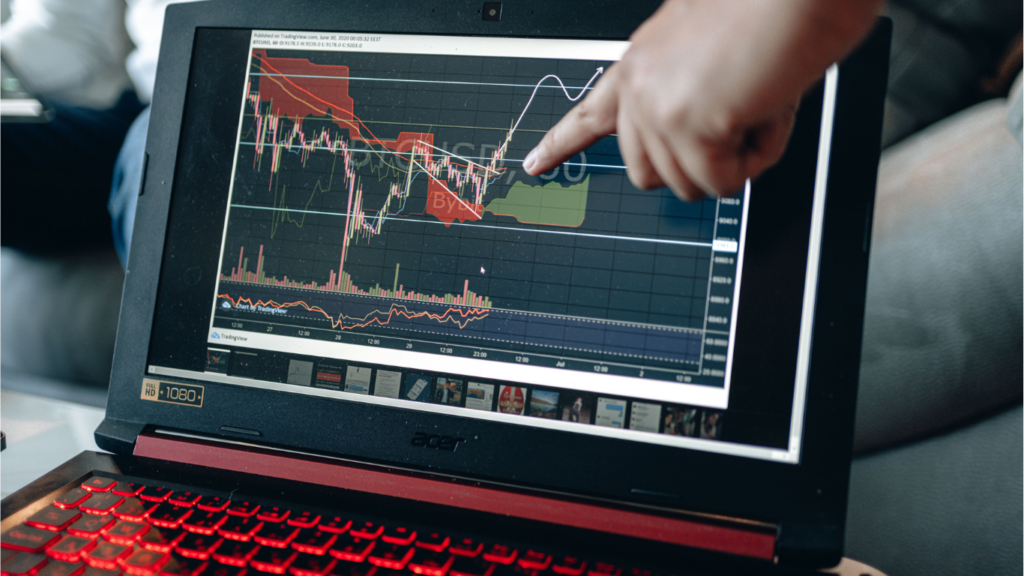
The Spiral — How One Loss Becomes Five
Revenge trading rarely stays at one extra trade. It spirals.
Here’s how the spiral typically goes, and I know this from personal experience:
First loss — planned trade, stops out. Frustrating but manageable.
Second trade — taken immediately after, setup not as clean. Rationalized as “good enough.” Stops out. Now the emotional temperature is rising.
Third trade — taken with bigger size to “catch up faster.” This is where the real danger begins. Stops out. Now you’re down significantly more than the original loss.
Fourth trade — by this point, clear thinking is largely gone. You’re not analyzing anything. You’re just clicking buy or sell based on which direction the market is currently moving. Stops out.
Fifth trade — you know you should stop. You know it. But stopping feels like admitting defeat. Like the market won. Like you failed. So you take one more.
By the end of the spiral, the original loss — which was probably manageable — has been multiplied three, four, sometimes five times over. And you feel worse than you did after the first loss, because now you’ve lost the money and your self-respect.
This is the full cost of revenge trading. Not just the pips. The psychological damage to your confidence that takes weeks to repair.
How to Recognize When You’re In It
The tricky part about revenge trading is that it doesn’t always feel like revenge trading in the moment. It disguises itself as legitimate analysis.
“This is actually a good setup” — when it isn’t. “I just need to be more aggressive today” — when you need to be less aggressive. “The market is giving me another opportunity” — when the market is giving you nothing, and you’re inventing opportunities.
These are the mental stories revenge mode tells. They sound reasonable. They feel reasonable. They’re not.
Here are the real signs you’re in revenge trading mode:
You’re still thinking about the previous loss while analyzing the new setup. If the previous trade is still in your head when you’re looking at a new one, your analysis is contaminated.
You sized up without a clear reason. If your standard lot size is 0.1 and you’re suddenly trading 0.3 “to make up for the loss faster,” that’s revenge trading.
You’re feeling urgency. Real trading setups don’t require urgency. If you feel like you need to get into a trade right now, that feeling is a red flag, not a signal.
You’re ignoring your rules. You have rules for a reason. If you’re finding reasons to bypass them — “this situation is different” — you’re in emotional mode.
You can’t clearly explain why you’re in the trade. Ask yourself: why am I taking this trade? If the honest answer is “because I want to make back what I lost” — that’s revenge trading. Exit or don’t enter.
A Second Story — Someone Else’s Spiral
A trader I know — I’ll call him Raza, he trades Gold and EUR/USD out of Karachi — had one of the worst revenge spirals I’ve ever watched unfold in real time in a trading group we’re both part of.
He’d had a solid month. Up about $800 on a $5,000 account. Consistent, disciplined work.
Then one Tuesday, a news event spiked Gold against his position. He lost $300 in about four minutes. A manageable loss — 6% of his account — but painful after a good run.
By Thursday of that same week he had lost an additional $1,100.
Not from the news event. From the six trades he took over the next 48 hours trying to recover from the news event.
His account went from up $800 to down $600 in under a week. Not because the market did something unusual. Because he did.
When I spoke to him afterward, he said something that stuck with me: “After that first loss, every trade I took felt like I was owed a win. Like the market had been unfair and I deserved to take it back.”
That feeling of being “owed” is the core of revenge trading. The market owes you nothing. It never did. Understanding that emotionally — not just intellectually — is one of the most important things a trader can develop.

What Happens to Position Sizing in Revenge Mode
One of the most dangerous things about revenge trading is what it does to position sizing.
When you’re trying to recover quickly, normal position sizes feel too small. If you lost 100 pips on a 0.1 lot, you’d need to win 100 pips at the same size to break even. That takes time. That feels too slow.
So you increase size. 0.2 lots. 0.3 lots. Sometimes more.
Now here’s the problem: bigger size means bigger losses if the trade goes wrong — which it often does when you’re in emotional mode. So the loss gets bigger. Which makes the emotional state worse. Which leads to even bigger size on the next trade.
This is how small losses become account-destroying losses. Not in one trade — in the compounding spiral of emotional size increases.
On MetaTrader 4 and 5, it’s dangerously easy to change lot size. One click up on the lot size field and you’ve doubled your risk. There’s no warning, no confirmation prompt. The platform assumes you know what you’re doing.
And in revenge mode, you don’t.
Practical Tools That Help Prevent It
Set a daily loss limit and make it non-negotiable.
Mine is 2% of account per day. When I hit it, the trading session is over. No exceptions. No “one more trade.” Done.
On MetaTrader, you can use an EA (Expert Advisor) that automatically closes all positions and prevents new ones when a daily loss limit is hit. Tools like the “Daily Loss Limit EA” are available free on MQL5.com. Set it up before you need it — because when you need it, you won’t want to install software.
On Binance and Bybit for crypto traders, you can set maximum loss amounts per session in the risk management settings.
Keep a trade journal and review it before your next session.
After every losing trade — especially one that hurt — write down what happened. Not just the entry and exit, but how you felt. Were you angry? Were you surprised? What did you tell yourself when you entered the next trade?
Google Sheets works fine. I keep mine simple: date, pair, setup type, entry, exit, result, and one line about my emotional state during the trade.
Reading your own past revenge spirals is more powerful than any rule. You see the pattern in your own handwriting and it becomes real.
Step away physically.
This sounds obvious. It’s harder than it sounds.
When a losing trade hits, the instinct is to stay at the screen. To watch the market. To “find the next opportunity.” But the screen is where the danger is.
I have a specific rule: after any loss that makes me feel something — frustration, anger, surprise — I physically leave my trading setup for at least 15 minutes before I’m allowed to consider another trade. Not close the platform and sit there. Leave the room. Get water. Walk outside for five minutes.
This works because emotional states are partly physical. Movement, breathing, changing your environment — these things actually shift your neurological state in ways that sitting at a screen don’t.
Use TradingView alerts instead of watching the screen.
A lot of revenge trading happens because traders sit there watching price move after a loss. They see a move, convince themselves it’s a setup, and enter.
Instead, after a loss, set alerts on TradingView for your actual planned levels and close the price chart. Only look at the chart again when an alert fires. This removes the visual stimulus that triggers impulsive entries.
The Rules I Actually Follow Now
After too many revenge spirals that I’m not proud of, here’s the framework I built. It’s not complicated. It doesn’t need to be.
1: Two losses in one session — done for the day. Not the week. Not forever. Just that session. Two losing trades and I close everything, log the trades, and stop. This is the single most effective rule I’ve ever made for myself.
2: Never increase position size after a loss. If anything, reduce it. The next trade after a loss gets smaller size than my standard, not bigger. This feels wrong in the moment because it slows recovery. That’s exactly why it works — it forces patience.
3: Wait 30 minutes after any loss before considering the next trade. Thirty minutes minimum. Set a timer. Do something else. The setup you’re looking at in the first five minutes after a loss is almost never a real setup. It’s the market moving and your brain inventing patterns.
4: Write down the reason for the trade before entering. One sentence. “I’m entering this trade because [specific reason based on my setup rules].” If I can’t write a clear reason that has nothing to do with the previous loss, I don’t enter.
5: Review the week’s journal before trading on Monday. Starting each week by reading what happened — including any emotional trades — keeps the patterns fresh. It’s easy to forget how bad a revenge spiral felt once time passes. The journal reminds you.
What to Do in the Moment When the Urge Hits
This is the part most articles skip — the practical, in-the-moment guidance for when you’re sitting there feeling the urge to revenge trade right now.
Acknowledge the feeling out loud. Sounds strange but it works. Literally say out loud or type in your journal: “I want to revenge trade right now because I just lost and I’m angry.” Naming the feeling breaks the automatic pilot slightly. You’re no longer just acting on the emotion — you’re observing it.
Check your daily loss limit. If you’ve hit it, the decision is already made. Log off. Done. The rule exists so you don’t have to make decisions in emotional states.
Ask yourself one question: Am I taking this trade because the setup is valid, or because I want to make back what I lost? Honest answer only. If it’s the second one, close the platform.
Text a trading friend. I have one person I message when I’m in this state. Just: “Just stopped out, feeling the urge.” Having someone external acknowledge it breaks the isolation of the spiral. They don’t need to say anything profound. Just the act of telling someone else what you’re feeling creates enough distance from the impulse to let logic back in.
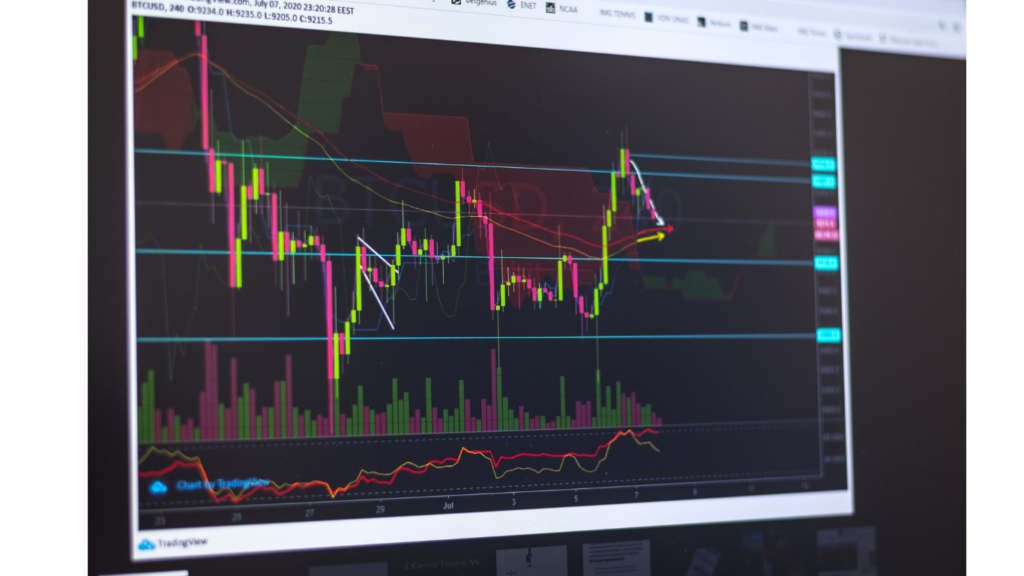
The Bigger Picture — What Revenge Trading Costs You Long Term
Beyond the immediate pip losses, revenge trading has costs that show up slowly:
Confidence erosion. Every revenge spiral, even ones that end relatively quickly, chips away at your confidence in your own judgment. You start second-guessing setups that are actually valid because you don’t trust yourself after the emotional trades.
Rule distrust. Traders who revenge trade frequently start to feel like their rules don’t work — when actually their rules were never the problem. The rules work fine. The revenge trades that break the rules are what doesn’t work. But it’s hard to see that clearly when you’re inside it.
Capital drain. This one is straightforward. Consistent revenge trading slowly empties accounts that disciplined trading would have grown. It’s a tax on emotional weakness that compounds over months.
The traders I’ve watched build sustainable profitability over years all have one thing in common: they accept losses cleanly. Not happily — accepting a loss is never fun. But cleanly, without the follow-up spiral.
They treat each trade as independent. The market didn’t do something to them. A trade didn’t work. Those are different things. The market is not their enemy. It’s a neutral system they’re trying to navigate. When a trade fails, they analyze it, learn what they can, and wait for the next valid setup — which might be tomorrow or might be next week.
That patience — and the absence of revenge trading — is more responsible for their results than any specific strategy or indicator.
The Friday I Mentioned at the Start
I want to come back to that Friday afternoon I opened with.
After the sixth trade stopped out and I finally closed the platform, I sat there for a long time. Not trying to analyze anything. Just sitting with how bad it felt.
I’d made 340 pips that week through legitimate work. I’d given all of it back and more in a few hours through emotional trading. The market hadn’t changed. The setups on Friday were actually worse than my setups earlier in the week. The only thing that changed was my emotional state.
That evening I wrote in my trading journal for about 45 minutes. Every trade from that Friday. What I was feeling before I entered. What I told myself to justify it. Where exactly the logic broke down.
Reading it back was uncomfortable. The rationalizations I’d used in the moment looked hollow on paper. “The setup was good enough” — it wasn’t. “I just needed one more to break even” — no I didn’t, I needed to stop.
I kept that journal entry. I still read it occasionally — not to punish myself, but as a reminder of what that state feels like and what it costs.
It’s the most expensive 45 minutes of trading education I’ve ever paid for. I’d rather have kept the pips. But since I didn’t, I made sure to keep the lesson.
Frequently Asked Questions
What is the psychology of revenge trading?
After a loss, your brain treats it as a threat and releases stress hormones — pushing you to act impulsively to recover. Logic shuts down and emotion takes over, leading to worse trades with bigger sizes.
How do I stop myself from revenge trading?
Set a strict daily loss limit before you start trading. After any loss, physically leave your screen for 30 minutes — rules made in calm moments protect you when emotions are running hot.
What is the 1% rule in trading?
Never risk more than 1% of your total account on a single trade. On a $5,000 account that’s $50 maximum risk per trade — it keeps one bad trade from seriously damaging your account.
Can I make $100 a day day trading?
Possible but not guaranteed — it depends entirely on your account size, strategy, and discipline. Focusing on $100 daily targets often leads to overtrading and revenge trading when the target isn’t hit.
Disclaimer:
This article is for educational purposes only and does not constitute financial or investment advice. Trading involves significant risk of loss. Always conduct your own research and consider consulting a qualified financial advisor before making any trading decisions.

Hira Ch is a Forex trader and financial content writer specializing in gold, crypto, and currency markets.Based in Lahore, she breaks down complex trading
concepts into simple, actionable insights at ExpertJourny.