
You know that moment when Bitcoin jumps 6% overnight and your family WhatsApp group suddenly turns into a finance channel? Someone’s cousin “called it.” Someone else asks if it’s too late to buy. And you’re sitting there with your chai, staring at the chart, wondering the one thing nobody explains properly: how do bitcoins increase in value when no company, no profits and no government sit behind them?
I’ll be straight with you. The answer is simpler than the YouTube thumbnails make it look. Bitcoin’s price goes up for the same reason a gold price, a stock price or a EUR/USD price goes up: more people want to buy than sell at that moment. The interesting part is why they want it, and why the supply can’t simply stretch to meet them.
This guide walks through seven forces that push the price up, a few that push it down, and the risks most beginner videos skip. There’s a numbers example you can follow with a calculator, plus free tools so you can check things yourself instead of taking my word for it. Take what’s useful. Ignore the rest.
Key Takeaways
- Bitcoin’s price rises when buyers outnumber sellers. Everything else on this page is a reason why that happens.
- Only 21 million coins will ever exist, and about every four years the number of new coins created gets cut in half.
- Demand comes from regular buyers, big funds, spot ETFs and people who want to protect their savings from a weak local currency.
- Interest rates, the US dollar and plain market mood can move Bitcoin as much as Bitcoin’s own news does.
- Bitcoin has dropped 70% or more before, so how much you put in matters more than any prediction.
How Do Bitcoins Increase in Value? The Simple Version
Forget Bitcoin for a second and think about a price tag in any market. The “price” is just the last deal two people agreed on, nothing more. When you buy a Bitcoin, a seller somewhere said yes to your offer. If more buyers keep showing up and sellers get picky, the next deal happens higher. If sellers panic, it happens lower. That’s the whole engine.
Here’s a simple way to picture it. A tea stall has a limited batch of fancy cups. Ten people want them, the owner made only five, so he raises the price and still sells out. Nobody wants them? The price drops, even if the cups are gorgeous. Bitcoin works the same way, except the stall is global, the customers number in the millions, and it never closes.
Okay, but where does the demand come from? Stocks have profits. Bonds pay interest. Bitcoin pays you nothing. What it has is scarcity, a network people trust and a few real uses. Because nobody can create more than 21 million coins, a lot of buyers treat it like digital gold. Others use it to move money across borders without a bank in the middle. And if you’ve ever watched your local currency lose ground against the dollar, you already understand why some people want an asset that no government controls.
Here’s the catch, though, and it’s a big one. Because Bitcoin earns no cash, nobody can punch numbers into a spreadsheet and announce the “fair” price. People guess, and the guesses change with the mood of the market. That’s why the price swings so hard. So how do bitcoins increase in value in practice? More demand runs into a supply that can’t react quickly.
How New Bitcoin Enters the Market
New coins come from mining. Computers around the world compete to add the next block of transactions to the chain, roughly every ten minutes, and the winner gets freshly created Bitcoin. After the April 2024 halving, that reward is 3.125 BTC per block. Do the math and you get about 450 new coins a day. Miners pay real electricity bills, so many of them sell part of what they earn, and that selling is the main source of fresh supply.
You can watch all of this yourself, and that’s one of the nicest things about Bitcoin. The site mempool.space shows blocks as they arrive. CoinGecko and CoinMarketCap show price, volume and market cap (that’s just the price times the coins in circulation). One tip: look at price and volume together. A rise on thin volume tells a very different story from a rise on heavy volume.
Why Scarcity Matters
The code allows 21 million coins, ever. More than 95% are already mined, which is about 20 million, and the last bit won’t arrive until around the year 2140. The schedule is public, predictable and almost impossible to change, because nearly everyone on the network would have to agree. A national currency works differently, since a central bank can create more whenever it decides to.
Some of those coins are gone for good, too. Estimates suggest several million sit in wallets whose owners lost the keys, think forgotten hard drives. Fewer coins available, same number of buyers. Still, scarcity by itself doesn’t make anything valuable, because plenty of rare things are worthless. It only matters when people actually want the thing.
[YOUR STORY] Fill the blanks, then retell it in your own words. The first time I really paid attention to Bitcoin was in [month, year]. I was [where, doing what]. The price had just [jumped / dropped] by about [X]%, and everyone said it was because of [reason]. I [what you did]. Looking back, I would [what you’d change]. (Delete this whole paragraph if you don’t have a true story.)
How Do Bitcoins Increase in Value? Seven Forces Explained
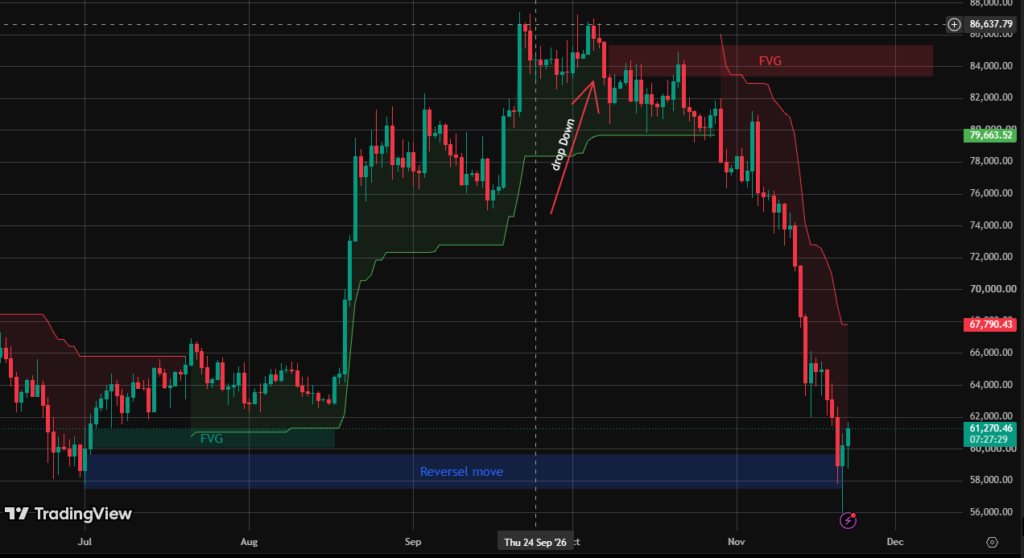
I find it easier to sort the forces into three buckets: supply, demand and mood. Supply is how many coins exist. Demand is how many people want them. Mood is how willing people feel to take risk at all. A real price move usually mixes all three, but asking “which bucket is this?” stops you from reacting to every headline.
Type 1: Supply Forces
Force 1: The 21 million cap. This is the foundation. With a hard ceiling, extra demand can’t print extra coins, so it has to bid for the ones that exist. But the cap works slowly. You won’t see it move a chart on a random Tuesday afternoon. Think of it as the floor under everything else, not a trigger for short-term moves.
Force 2: Halvings. About every four years, or every 210,000 blocks, the mining reward gets cut in half. That happened in 2012, 2016, 2020 and 2024, and the next one is expected around 2028. Each time, the flow of new coins shrank. Prices rallied in the year after past halvings, but that’s four data points, which is a very small sample. So don’t bet your savings on a calendar. Everyone also knows the date years ahead, so plenty of traders buy early, and the move can start before the halving even happens.
Type 2: Demand Forces
Force 3: Real-world adoption. More people owning and using Bitcoin means more possible buyers. In countries where the local currency loses value fast, people buy Bitcoin or dollar stablecoins to protect their savings. Families and freelancers also use crypto to send money abroad, since it can be faster and cheaper than a bank transfer. Adoption builds slowly, though, and it doesn’t show up in the price overnight. If you want a rough read on whether usage is growing, Glassnode publishes on-chain numbers like active addresses.
Force 4: Institutional money and spot ETFs. In January 2024, US regulators approved the first spot Bitcoin ETFs. These let people get Bitcoin exposure through an ordinary brokerage account, with no wallet or exchange needed. When money flows into a fund, the manager buys real Bitcoin. During some weeks in early 2024, those funds bought coins faster than miners could create them, which is demand soaking up supply in real time. A few public companies hold Bitcoin on their balance sheets too.
It cuts both ways, though. When investors pull money out of the funds, managers sell. You can follow daily inflows and outflows on trackers like Farside Investors. Big money gives the market depth, but it can leave as fast as it arrived.
Type 3: Market-Mood Forces
Force 5: Interest rates and dollar liquidity. When central banks like the US Federal Reserve raise rates, safe options such as bank deposits and bonds pay more, and risky assets often lose some shine. Cheap money tends to do the opposite. Bitcoin has often traded like a risk asset, rising when money is easy and struggling when it tightens. But the link is loose. Some months it disappears, and sometimes Bitcoin does the exact opposite.
If you trade forex, you already know this territory. Bitcoin is priced in US dollars, so a strong dollar can act like a headwind. An economic calendar such as Forex Factory helps you spot Fed meetings and inflation reports, and those days tend to shake every market at once.
Force 6: Regulation and news. A friendly rule can bring in new buyers. A ban or a crackdown can scare them off. Rules differ by country and they keep changing, so where the news comes from matters. Failures hurt too: when the FTX exchange collapsed in November 2022, confidence in the whole market took a beating and prices fell. Headlines can move the price within minutes, but the effect often fades. Chasing a candle after a headline is a classic way to buy near a short-term top.
Force 7: Sentiment and leverage. Fear and greed drive more of Bitcoin’s daily moves than most people admit. When everyone feels confident, buyers pile in and push the price up. Leverage adds fuel. Lots of traders borrow money to take bigger positions, and when the price turns against them, the exchange closes their trades automatically. Those forced sales push the price further in the same direction. A sudden jump can be a short squeeze, where traders betting on a fall are forced to buy back. A sudden drop can be the same thing in reverse.
You can track the mood with the Fear & Greed Index at alternative.me. I also wrote about how fear and greed in trading can steer your own decisions, because the same emotions that move the market move you too.
Which Type Matters for You?
It depends on how you plan to use Bitcoin. Holding for years? Supply and demand matter most, and daily mood swings deserve a shrug. Trading swings over days or weeks? Mood matters more, because that’s where the fast moves come from. Brand new? Just watch for a while. Pick one force a week and see how the price reacts to it.
[YOUR APPROACH] Fill the blanks, then say it in your own words. Personally, I [hold / swing trade / only watch] Bitcoin, and the force I pay most attention to is [force] because [your reason]. (Delete this paragraph if it doesn’t fit you.)
Your own situation matters as much as the chart. Money you need within a year doesn’t belong in something that can fall 70%. So decide how much you can afford to lose before you open a single chart.
What Pushes Bitcoin’s Value Down
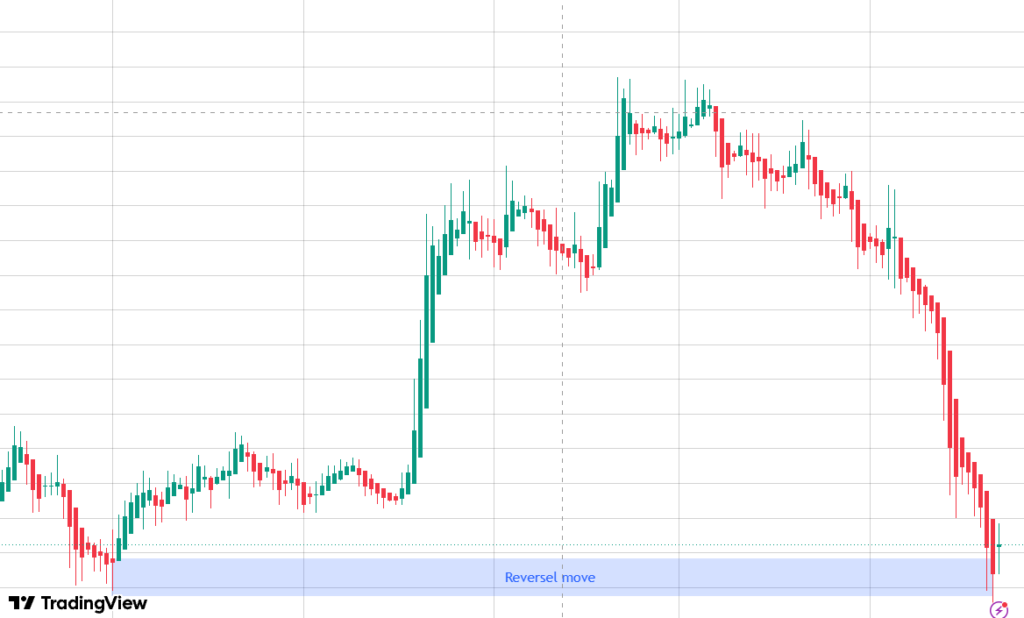
Every force above works in reverse. ETF outflows mean funds are selling real coins. Rate hikes pull money out of risky assets. A harsh rule or an exchange failure can scare buyers off overnight. Miners can add pressure too: after a halving their income per block drops, and weaker miners sometimes sell more coins to cover costs. Leverage makes all of it worse, because forced sellers feed on each other.
The biggest downside force, though, is a simple loss of belief. Bitcoin has no profits to fall back on, so when confidence fades there’s no spreadsheet value to catch the price. Keep both lists in your head. Something that pushes the price up this month can push it down next quarter.
A Real-World Example: How Do Bitcoins Increase in Value After a Halving?
Let’s use round numbers so the math stays easy. Treat this as an illustration, not a prediction and not a record of one of my trades.
Before the April 2024 halving, miners earned 6.25 BTC per block, and about 144 blocks arrive each day. That’s roughly 900 new coins daily. Say the price is $60,000. Then 900 coins is about $54 million of fresh supply every day. After the halving the reward is 3.125 BTC, so daily supply drops to about 450 coins, or $27 million at the same price.
Now imagine buyers turn up every day with $54 million to spend. Before the halving, miners supplied exactly that much, so the market stayed balanced. Afterwards, miners supply only $27 million worth. The other $27 million of demand has to buy from existing holders, and holders sell only at a price they like, so buyers bid higher. So how do bitcoins increase in value after a supply cut? Buyers outbid each other for a smaller flow of new coins.
Real life is messier, of course. Demand isn’t a fixed $54 million, and it changes every day. In 2024 the price didn’t jump on halving day. Much of the move happened earlier because traders saw it coming, and during some stretches of that year, ETF buying shifted the balance more than the halving did. The halving was one ingredient, not the whole recipe.
Now the other side. Say you bought $1,000 of Bitcoin near the November 2021 peak, around $69,000 per coin. A year later, in late 2022, the price sat near $16,000. Your $1,000 would be worth roughly $230. To get back to even, the price would have to rise by more than 300%. That’s why how much you risk matters more than any forecast. If you want to practice sizing a position, the forex position sizing and risk management guide uses the same math you’d use for Bitcoin.
[YOUR CHART] Add a TradingView screenshot from a day you watched Bitcoin react to news or ETF flows, then fill in: Date: [date]. The news was [what happened]. In the next few hours the price [what it did]. What I noticed: [your observation]. (Delete this paragraph if you don’t have one.)
Pros and Cons of Holding Bitcoin for Price Growth
Every asset has two sides. Here’s the honest version.
Pros
- Fixed supply: The 21 million cap sits in the code, so nobody can quietly print more.
- Always open: It trades 24/7, so you can act any time, unlike stocks with closing bells.
- Easy to start small: You can buy a fraction of a coin, so you don’t need thousands of dollars.
- Free data: Price, flows and on-chain numbers are public, so you can research without paying for a service.
Cons
- Wild swings: Drops of 50% or more have happened several times, and they test anyone’s patience.
- No cash flow: No dividends, no interest. The price rests on belief and demand alone.
- Custody risk: Lose your keys or trust the wrong exchange and your coins can vanish.
- Rule changes: Laws and taxes differ by country and can change fast.
Risks to Consider Before You Buy
Before you act on any answer to “how do bitcoins increase in value,” look at what can go wrong. I’m not trying to scare you. This is just the part most videos skip.
Volatility and drawdowns. Bitcoin can fall 20% in a week with no warning. So never put in money you’ll need for rent, school fees or an emergency. A simple rule helps: decide what you’re willing to lose, and stop there.
Scams. Fake giveaways, “guaranteed return” trading bots and paid signal groups go after beginners every single day. If someone promises fixed profits, that’s a red flag. Every time. Real markets don’t guarantee anything. Open exchanges and apps from their official websites, and switch on two-factor authentication everywhere.
Leverage. Borrowing to trade multiplies your losses as fast as your gains. The exchange can close your position automatically when the price turns against you, and you can lose your whole deposit in minutes. If you’re new, skip leverage until you’ve practiced with small amounts.
Custody and exchange failures. Coins left on an exchange mean you’re trusting that company. FTX in 2022 showed that big names can fail. Many long-term holders move coins to a wallet they control, but then keeping the recovery phrase safe becomes your job. Write it on paper. Never share it, not even with “support.”
Rules and taxes. Crypto rules differ by country, and they keep changing. I can’t tell you what’s legal where you live, so check your local financial regulator and tax rules before you buy.
Your own emotions. Honestly, this one costs people the most. Fear makes you sell near the bottom. Greed makes you buy near the top. A written plan with an amount, a reason for entry and an exit rule protects you from your own mood. The risk/reward calculator on this site can help you test a plan before real money goes in.
[YOUR MISTAKE] One honest mistake you or someone close to you made with crypto: [what happened], [what it cost, in your own words, exact numbers not required], and [what it taught you]. (Delete this paragraph if you don’t have one.)
The Thought I’d Leave You With
Next time Bitcoin jumps and everyone online has a theory, pause and ask which bucket it belongs in: supply, demand or mood. Usually it’s mood. And mood changes faster than anything on a chart.
A price only tells you what someone paid a minute ago. It never promises what the next buyer will pay. Hold onto that one idea and you’re already ahead of most people chasing green candles.
Frequently Asked Questions
What makes Bitcoin rise in value?
Bitcoin rises when more people want to buy than sell. A fixed supply of 21 million coins, halvings, ETF and institutional buying, easier money and positive sentiment all push demand up or supply down.
What if I put $1000 into Bitcoin 10 years ago?
In late November 2016, Bitcoin cost about $751, so $1,000 would have bought roughly 1.33 BTC. At about $59,000 per coin (as of November 22, 2026), that stake would be worth around $78,000, before fees and taxes.
What will Bitcoin be worth in 2030?
Nobody can say. Bitcoin trades near $59,000 now, and forecasts for 2030 range from far below that to several times higher, so treat any target as a guess, not a plan.
How much is 1 Bitcoin 2 years ago?
On November 22, 2024, one Bitcoin peaked near $99,600, just under $100,000. At about $59,000 today (November 22, 2026), the price is roughly 40% lower.
Disclaimer
This article is for educational purposes only and isn’t financial advice. Cryptocurrencies are highly volatile, and you can lose all the money you put in. Do your own research and never invest money you can’t afford to lose.

Hira Ch is a Forex trader and financial content writer specializing in gold, crypto, and currency markets.Based in Lahore, she breaks down complex trading
concepts into simple, actionable insights at ExpertJourny.
[…] Pro Mode for experienced traders […]