
What Is The Best Time To Trade Gold.I remember sitting in front of my laptop at 2 AM, watching XAU/USD just… sit there. Barely moving. I had a position open, spread was wide, and every pip felt like it was being dragged through mud. My stop loss wasn’t hit. My take profit wasn’t hit. Nothing was happening. I just sat there refreshing MT4 like an idiot waiting for something that wasn’t going to come.
That night cost me about six hours of sleep and a small chunk of my trading account — not because I was wrong about the direction, but because I was trading at completely the wrong time.
That’s the thing nobody tells you when you first start trading gold. Everyone talks about support and resistance, RSI, Fibonacci levels — all of that. But timing? Most people figure it out the hard way. I definitely did.
So let me save you some of that pain.
Why Gold Timing Is Different From Everything Else
Gold isn’t like a random forex pair. XAU/USD has its own personality. It can be completely dead for hours, then explode 30–40 pips in minutes when New York opens or when a US news event drops.
I’ve traded EUR/USD, GBP/USD, even some indices — but gold humbles you differently. When it moves, it really moves. And when it doesn’t, the spread eats you alive while you sit there hoping.
The market is technically open 24 hours, five days a week. But “open” doesn’t mean “tradeable.” There’s a massive difference between gold being technically available to trade and gold actually having enough volume and momentum to give you clean, predictable movement.
Think of it like a street food market. It’s technically a market all day. But the real action? That’s between 6 PM and 10 PM. Before that, it’s mostly vendors setting up. After that, everyone’s gone home.
Gold has those same peak hours. And once I started respecting them, everything changed.
The Three Sessions — What Actually Happens in Each
Asian Session (Tokyo) — 2:00 AM to 9:00 AM GMT / 7:00 AM to 2:00 PM PKT
This is where I wasted most of my early sleepless nights.
The Asian session is generally quiet for gold. Volume is lower, movement is limited, and the price tends to consolidate or drift sideways. You’ll see small ranges — sometimes 10 to 15 pips of movement over several hours.
Now, this isn’t completely useless. Sometimes during the Asian session, gold will respect a key support or resistance level beautifully and give you a clean entry for a position you plan to hold into London or New York. Scalpers sometimes play tight ranges during this time too — but that requires experience, discipline, and very low spreads.
For most traders, especially beginners? The Asian session is better for analysis than action. Open your charts, mark your levels, plan your trades. Don’t execute them yet.
One exception: if there’s a major news event out of China or Japan — like a surprise monetary policy announcement or significant economic data — gold can suddenly spike. But these are relatively rare and hard to predict.
My honest advice: use this time to do your homework. Read Forex Factory. Check the economic calendar on Investing.com. Prepare, don’t trade.

London Session — 8:00 AM to 5:00 PM GMT / 1:00 PM to 10:00 PM PKT
This is where gold wakes up.
London opens and volume starts flowing in properly. You’ll notice spreads tighten, movement becomes more directional, and those consolidation ranges from the Asian session start to break.
The first one to two hours of London — roughly 8 AM to 10 AM GMT — is particularly interesting for gold. This is when European institutional traders come in and start establishing positions. They’re not gambling. They have serious capital, and when they move, gold moves with them.
I’ve had some of my best gold trades trigger right at the London open. A key level that held all through the Asian session suddenly breaks clean with volume behind it. That’s the London breakout setup, and it’s very real.
But here’s what I also learned: the first 15 to 30 minutes of London can be deceptive. There’s sometimes a fake spike in one direction before the real move. I got caught by this multiple times — entering a breakout that reversed immediately and took out my stop. Now I wait a little. Let the dust settle. Then enter.
The mid-London session (10 AM to 1 PM GMT / 3 PM to 6 PM PKT) can slow down a bit before New York comes online. Sometimes gold drifts, sometimes it continues its trend. This period requires more discretion.
New York Session — 1:00 PM to 10:00 PM GMT / 6:00 PM to 3:00 AM PKT
This is the main event for gold. Full stop.
When New York opens and overlaps with London — roughly 1 PM to 5 PM GMT — that’s the highest volume period in the entire gold trading day. Both major financial centers are active simultaneously. Spreads are at their tightest. Movement is at its strongest and most directional.
This is when I do most of my gold trading now.
The New York open itself (1 PM GMT / 6 PM PKT) often brings a sharp directional move. If there’s a trend already established in London, New York frequently continues it or accelerates it. If London was ranging and choppy, New York often picks a direction and commits to it.
And then there’s US news.
Gold priced in dollars. So any major US economic data that affects the dollar will directly impact gold — usually in the opposite direction. Dollar strengthens, gold drops. Dollar weakens, gold rallies. It sounds simple and it basically is, except the speed at which it happens is not simple at all.
The New York afternoon (after 5 PM GMT / 10 PM PKT, once London closes) is the trickiest part. Volume starts dropping. Movement slows. Sometimes you get continuation, sometimes sudden reversals with no clear reason. I generally close my intraday positions before this period or tighten my stops significantly.
The Actual Best Hours — Be Specific
If someone asks me right now: “When exactly should I be sitting at my screen ready to trade gold?” — here’s my honest answer:
Primary window: 1:00 PM to 5:00 PM GMT (6:00 PM to 10:00 PM PKT)
This is the London-New York overlap. Volume is highest. Spreads are tightest (often 20–30 cents on good brokers like IC Markets or Exness). Movement is cleanest. This is prime time.
Secondary window: 8:00 AM to 10:00 AM GMT (1:00 PM to 3:00 PM PKT)
London open. Good for breakout setups if you’ve prepared your levels during the Asian session. Requires a bit more experience to navigate the fake spikes.
Opportunistic window: Around major US news releases
NFP (Non-Farm Payrolls), CPI (inflation data), FOMC (Federal Reserve decisions) — these are explosive for gold. I’ll talk more about these below.
US News Events — The Wild Card You Cannot Ignore
Let me tell you about the first time I traded gold during an NFP release.
I had a short position. Gold had been trending down all morning. Everything looked perfect. Then the NFP numbers dropped — worse than expected. Dollar weakened. Gold spiked 80 pips in about 45 seconds.
My stop loss was hit so fast it actually slipped. I got out at a worse price than my stop was set at.
I sat there staring at the screen thinking: what just happened?
That was my introduction to news volatility in gold. And it’s a lesson I’ve never forgotten.
Here are the events that move gold the most, every single time:
NFP (Non-Farm Payrolls) — Released first Friday of every month at 1:30 PM GMT. This is the biggest regular event on the calendar. Gold can move 50 to 150 pips in minutes.
CPI (Consumer Price Index / Inflation Data) — Released monthly. When inflation is higher than expected, people buy gold as a hedge. When it’s lower, gold can drop sharply.
FOMC Meetings (Federal Reserve) — When the Fed changes interest rates or even hints at changing them, gold reacts strongly. Higher rates = stronger dollar = lower gold. Lower rates or dovish language = gold rockets up.
US Dollar Index (DXY) — Not a news event, but keep one eye on DXY always. Gold and DXY move in opposite directions almost religiously.
I use Forex Factory (forexfactory.com) every single morning to check what’s coming that day. If there’s a high-impact red event during the session I’m planning to trade, I either wait for it to pass before entering, or I don’t trade that session at all.
Trading gold into a major news release without knowing it’s coming is like driving at night with no headlights. You might survive, but it’s not a strategy.
A Practical Weekly Gold Trading Schedule
Here’s roughly how I approach each day of the week — based on years of observation:
Monday: Volume is usually lower as markets settle in for the week. Gold often drifts or continues the previous Friday’s trend. I watch but trade light. Good day for analysis.
Tuesday & Wednesday: These are my favorite days. Good volume, clear trends often develop, and there’s usually meaningful movement in both London and New York sessions. If there are no major news events, this is prime trading time.
Thursday: Usually active, similar to Tuesday/Wednesday. Sometimes there are US unemployment claims data releases (Thursdays at 1:30 PM GMT) which can move gold.
Friday: Trade carefully. The morning can be excellent — especially if NFP is scheduled. But after 3 PM GMT on a Friday, volume drops fast as traders close positions before the weekend. Gold can do weird, unpredictable things in those last hours. I generally stop trading by 4 PM GMT on Fridays.
Weekend: Markets are closed. This is when I review my trades, plan for next week, and sometimes read up on macroeconomic news that might affect gold the following week.
Worst Times to Trade Gold — And Why
Late Asian session / early London pre-market (11 PM to 7 AM GMT / 4 AM to 12 PM PKT): Low volume, wide spreads, choppy movement. Unless you have a very specific reason, avoid this.
Friday after 3 PM GMT: Liquidity dries up. Spreads widen. Random spikes can occur. Just stop.
Immediately before a major news release: I don’t enter new positions within 15 to 30 minutes of a red-folder event. The spread often widens sharply just before the release, and the movement can be violent and unpredictable.
The dead period between London close and early New York afternoon (5 PM to 6 PM GMT): This 60-minute window after London closes but before New York fully takes over can be messy. Not always — but enough times to be cautious.
During thin holiday markets: Christmas week, New Year’s, US Thanksgiving. Volume disappears. Gold becomes erratic and can whipsaw without reason.
Mistakes Traders Make With Gold Timing
Mistake 1 — Trading at 3 AM because they can’t sleep
I’ve done this. You wake up, check your phone, see gold moving. You open a position half-asleep. You wake up in the morning either lucky or down 40 pips. This is not trading. This is gambling in your pajamas.
2 — Not knowing what’s on the economic calendar
I had a student (I used to mentor a few traders in my trading group) who entered a beautiful short setup on gold — perfect technical analysis, everything aligned. He had no idea CPI was releasing in 20 minutes. Gold spiked 90 pips against him. He held, hoping it would reverse. It didn’t. Wiped out two weeks of profits in one trade.
Check the calendar every single morning. No exceptions.
3 — Assuming more hours = more opportunities
More screen time does not equal more profit. I’ve tested this personally. My most profitable months were when I was disciplined about only trading during specific windows. My worst months were when I was “always watching” and taking every little move that caught my attention.
Gold rewards patience, not hustle.
4 — Trading the Asian session like it’s the New York session
The setups look similar on the chart. Breakouts happen. But the volume behind them is completely different. A breakout at 3 AM GMT with no volume behind it will often reverse quickly. The same breakout at 2 PM GMT with London and New York both active? That move can run for hours.
Same chart pattern, completely different outcome. Session matters.
Mistake 5 — Forgetting about spread during off-peak hours
On a good broker, gold spread during peak hours might be 20 to 30 cents. During dead hours? It can widen to 60, 80, even 100 cents or more. That’s 6 to 10 pips of cost before the trade even starts moving in your favor. Over many trades, this adds up to a serious drag on your account.
Always check what your broker’s spread looks like at the time you’re planning to trade. On MT4 or MT5, you can see the live spread right on the symbol. It takes two seconds.
The Tools I Actually Use
MT4 / MT5
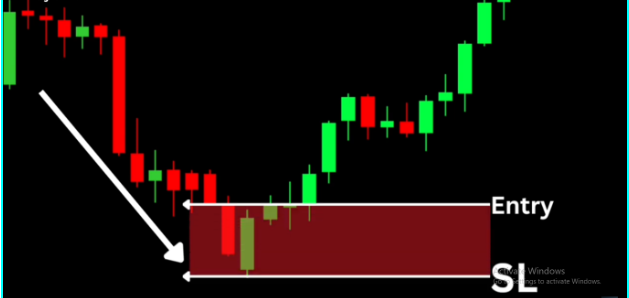
— For charting and execution. I keep multiple timeframes open: the 4-hour for trend direction, the 1-hour for structure, and the 15-minute for entries.
TradingView:
For cleaner charts and sometimes for checking gold against DXY in a split screen. The free version is enough for most people starting out.
Forex Factory
Economic calendar. I check it every single day. Filter it to show only high-impact events. Red folders only. That’s all that matters for gold timing.
Exness or IC Markets
These are my preferred brokers for gold because their spreads during peak hours are genuinely tight. Spread matters more on gold than almost any other instrument because the volatility is so high.
A simple notebook
Seriously. I write down my plan for each session before I start. What levels am I watching? What’s my bias? What news is coming? This takes ten minutes and saves me from impulsive decisions.
One More Thing Nobody Mentions
Your timezone matters more than you think.
I’m based in Pakistan (PKT — UTC+5). The London open is at 1 PM for me. New York open is at 6 PM. That means the best gold trading hours fall right in the evening — which is actually perfect. I can work or study in the morning, do my analysis after lunch, and be ready for the London session at 1 PM. Then trade through the London-New York overlap until around 10 PM.
If you’re in Pakistan or similar timezone, you’re actually in a fairly good position to catch the best gold sessions without completely destroying your sleep schedule.
The traders I feel for are the ones in Southeast Asia — the peak hours fall at 2 AM to 6 AM for them. That’s rough. But even then, I’d say: trade less, trade better. Two good trades per week during the right hours will always beat ten bad trades taken just because you were awake.
Final Thought
Gold trading is one of those things that looks complicated from the outside and is actually quite simple once you understand a few core principles. Timing is one of those principles — and honestly, once you get it, you’ll wonder how you ever traded without thinking about it.
You don’t need to be at your screen 24 hours. You don’t need to catch every move. You just need to be present during the right windows, prepared with your levels, and patient enough to wait for the market to come to you.
The best trade I ever made on gold was one where I waited almost the entire London session doing nothing. Watched gold test a key level three times. Then when New York opened and it broke clean with volume — I entered. Clean entry, clean trend, closed it two hours later with 120 pips.
The waiting was the strategy. The execution was just the last step.
Show up at the right time. Do your homework. Let gold do the rest.
Frequently Asked Question:
Q1: What is the perfect time to trade gold?
The perfect time to trade gold is during the London-New York overlap — 1:00 PM to 5:00 PM GMT (6:00 PM to 10:00 PM PKT). Volume is highest, spreads are tightest, and movement is most directional during this window.
Q2: What is the 3-5-7 rule in trading?
The 3-5-7 rule means: risk maximum 3% per trade, keep 5% total open risk at any time, and your winning trades should deliver at least 7% return to maintain a healthy risk-reward balance.
Q3: What is the 5 3 1 rule in trading?
The 5-3-1 rule means: focus on only 5 currency pairs or instruments, master 3 trading strategies, and trade at 1 specific time of day consistently — to avoid overtrading and confusion.
Q4: Which time is best for XAUUSD?
The best time for XAU/USD is between 1:00 PM and 5:00 PM GMT (6:00 PM to 10:00 PM PKT) when London and New York sessions overlap, giving gold its highest volume and sharpest price moves.
This article is for educational purposes only and is not financial advice. Trading gold and other instruments involves significant risk. Always do your own research and consider consulting a professional financial advisor before making any trading decisions.

Hira Ch is a Forex trader and financial content writer specializing in gold, crypto, and currency markets.Based in Lahore, she breaks down complex trading
concepts into simple, actionable insights at ExpertJourny.