

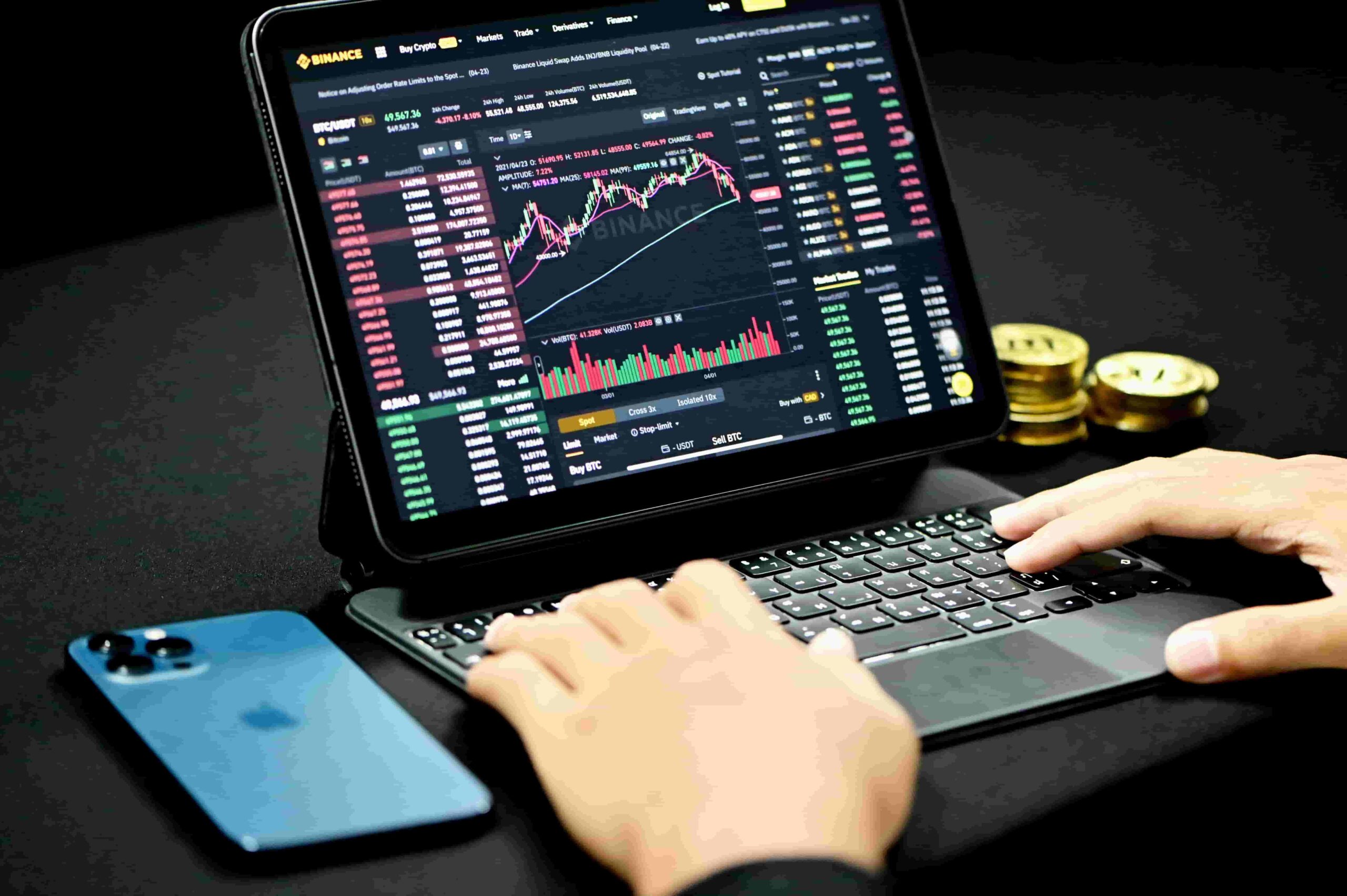
Forex trading has become one of the most popular ways to earn money online, but many beginners still wonder: What exactly is Forex? How does it work? And how do traders make profit?
In this guide, we will break everything down in simple English so even absolute beginners can understand
Have you ever wondered why Forex Trading is the most popular topic on YouTube, the most discussed topic in financial forums, and the dream of millions of people? Why is it that every day, thousands of new students open charts hoping to crack the code of currency? Is it just the promise of quick money? Or is there something deeper, a hidden magnetic pull that draws people into this 24-hour digital arena?
answer lies not in one reason, but in a perfect storm of freedom, flexibility, and opportunity. Forex Trading is not just a way to earn money; for many, it represents a lifestyle. It is the gateway to financial freedom where you are not bound by a boss, a cabin, or a cubicle. In this guide, we will explore the deep reasons why people flock to Forex, the reality behind the dream, and what actually drives the masses to this market. At ExpertJourny, we want to give you the honest truth, not just the shiny advertisements.
The Dream of Financial Independence:
The primary and most powerful reason people choose Forex is the dream of becoming their own boss. In the 9-to-5 job world, you trade your time for a fixed salary. You work for 40 years, retire, and hope your pension lasts. Forex trading offers an escape from this “Rat Race.” It sells the dream of “Quit your job” and travel the world.
The stories you see on social media—traders making thousands of dollars while sitting on a beach—are the modern-day equivalent of finding a gold mine. The idea that you can build a laptop lifestyle where your office is a cafe in Bali or a mountain in Switzerland is incredibly attractive. This vision of freedom is the biggest hook. It promises that you are not stuck in traffic, you are not answering to a rude boss, and you are not waiting for Friday to enjoy your life.
However, this dream is often romanticized. The reality is that building a profitable trading career takes years of blood, sweat, and tears. It is not a magic button; it is a business that requires hard work. But the hope of that freedom is strong enough to make people start their journey.
How Forex Trading Works
Forex is always traded in pairs, such as EUR/USD or GBP/JPY. When you buy a currency pair, you are buying one currency and selling the other at the same time.
For Example:
If you buy EUR/USD, you believe the Euro will rise in value against the US Dollar.
If the Euro becomes stronger, the pair’s price increases—and you make profit.
Every movement in price creates opportunities to buy or sell.
24-Hour Market: The “Always Open” Advantage
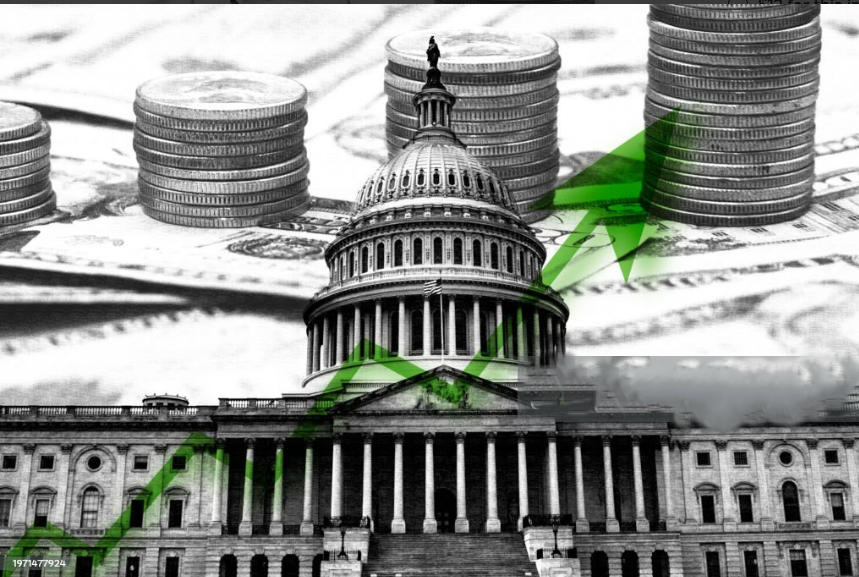
Imagine a store that never closes. It sells its products 24 hours a day, 5 days a week, 52 weeks a year. This is the Forex market. Unlike the stock market, which rings a bell at 9:30 AM and closes at 4:00 PM, Forex is alive when you wake up at 3:00 AM, and it is still moving when you go to sleep at midnight.
This continuous nature is a massive draw for students and part-timers. If you have a full-time job, you cannot trade stocks easily because the market is closed when you are free. Forex fits perfectly into the pockets of time of busy individuals. You can trade before your job, during your lunch break, or late at night. You are the master of your schedule.
Furthermore, the 24-hour cycle means news is always happening. While the US sleeps, Asia is trading. While Asia sleeps, Europe is trading. There is always a currency pair that is moving, offering a chance to make a profit at any hour. This constant activity creates an addiction to the charts. You never have to wait for the market to “open”; it is always there, waiting for you.
4. How Traders Make Profit
Traders make profit by correctly predicting the market direction.
we can make money in two ways:
1. Buying (Going Long)
you think the price will go up, you place a buy trade.
When the price rises, you profit.
2. Selling (Going Short)
If you think the price will fall, you place a sell trade.
When the price drops, you earn money.
Profits are calculated in pips, which are tiny movements in the price.
5. Key Terms: Pips, Lots & Leverage
The Power of Leverage
Another major reason people love Forex is the concept of Leverage. In simple terms, leverage allows you to control a large amount of money with a small deposit. For example, with just $100, a broker might let you control $50,000 worth of currency. This sounds like magic. You can turn a small $100 profit into $5,000 if the price moves in your favor.
This amplification of money is the biggest attraction for people who have little capital to start with. A student with $50 or $100 feels that in the real world, this money is useless. But in Forex, that $50 can be magnified using 50x or 100x leverage to feel like a massive account.
However, this is the most dangerous trap. While it attracts people, it also wipes them out. Beginners often see the potential of 500% profit but forget that a 2% move against them can wipe their account in seconds. The allure of turning a small sum into a fortune overnight is why people jump in, often without understanding the risks involved.
Leverage
Leverage allows you to trade large amounts with small capital.
For example, with 1:100 leverage, your $100 can control $10,000 in the market.
However, leverage can also increase losses—so beginners must use it carefully.
Low Barrier to Entry
One of the biggest practical reasons for Forex’s popularity is how easy it is to start. You do not need a degree from Harvard. You do not need a license from a government body. You do not need millions of dollars to buy a seat on the stock exchange.
To start trading Forex, all you need is:
laptop or smartphone.
internet connection.
the small amount of capital (as low as $10 or $50).
A broker account (which is free to open).
This incredibly low barrier to entry democratizes trading. It gives hope to the student in a hostel, the employee in a small shop, or the person living in a developing country. The signal is: “You can try. You can compete with the big banks.” This accessibility is a double-edged sword, though. While it gives everyone a fair chance, it also leads many unprepared people to lose their hard-earned savings because they underestimated the difficulty of the market.
Middleman & Manipulation
In many businesses, there is a middleman—a broker, a dealer, or an agent—who takes a cut. In the physical stock market, sometimes there can be delays, or “Market Makers” who push prices around to hunt for stop losses.
Forex is different. Because the market is so huge (trillions of dollars daily), it is very hard for a single entity to manipulate the price. Even the biggest central bank struggles to control the currency forever. This creates a sense of fairness. Traders believe that if their analysis is correct, the market will honor it. They are not fighting against a rigged system; they are reading the natural flow of supply and demand.
This lack of manipulation makes traders feel like they have a fair shot. They believe that if they learn the skill (Technical Analysis), they can win consistently. The market is the ultimate judge, and it doesn’t care who you are—rich or poor, American or Asian. It only cares about your analysis.
The Community and Culture
Finally, people choose Forex because of the community. Look at Instagram or Twitter. You will see a massive culture of traders sharing charts, profits, and losses. There are influencers, mentors, and communities that welcome beginners.
This culture creates a sense of belonging. Learning a complex skill alone in your room can be lonely and boring. But being part of a “Trading Fam” makes it exciting. You share your first $10 profit, and people celebrate with you. You share a loss, and people support you. The “Hustle Culture” is powerful. Seeing others work hard, sleep late, and study charts motivates you to do the same.
Furthermore, the rise of “Prop Firms” (Proprietary Trading Firms) has added to the allure. These firms hire traders and give them capital to trade (e.g., $100,000 account). This is the ultimate dream for a skilled trader without money. It validates the idea that if you have the skill, money will find you.
The Dark Side: Why Many Fail
We cannot talk about the attraction without talking about the trap. The very reasons that attract people—Leverage and Freedom—are the reasons they fail.
The freedom is real, but it is only for the 1% who master the art. The leverage makes money fast, but it burns accounts faster. The 24-hour market gives opportunity, but it also causes sleep deprivation and burnout.
People choose Forex because they want to run before they can walk. They see the 1% who succeeded and think, “I can do that too.” They ignore the 99% who lost and quit. The marketing shows the Ferrari, but it hides the bus ticket back home.
Conclusion:
People choose Forex Trading for many reasons: the dream of quitting the 9-to-5, the excitement of the 24-hour market, the power of leverage, and the low barrier to entry. It is a world of endless possibility.
But the most successful traders are the ones who were attracted not by the greed, but by the challenge. They love the puzzle, the psychology, and the global nature of the market. If you are choosing Forex, do it for the right reasons. Do it because you love the charts, not because you hate your job.
At ExpertJourny, we encourage you to look past the dream. See the market for what it is: a vast, powerful ocean. Respect it, learn it, and maybe one day, you will be the captain of your own ship.
FAQ,s
1. Why is Forex trading so popular?
Forex is popular because it offers high liquidity, 24/5 access, low barriers to entry, and the potential for profit using leverage, attracting people seeking financial freedom.
2. Is Forex trading good for beginners?
It is accessible for beginners, but it is high-risk. Without proper education and risk management, beginners often lose their capital quickly.
3. Why do people fail in Forex?
Most fail due to over-leveraging, emotional trading (fear/greed), lack of a proper strategy, and underestimating the difficulty of the market.
4. Can you get rich quick from Forex?
It is extremely rare. While leverage allows large gains, it is statistically more likely to blow up an account than to build a fortune overnight.
5. What is the best time to trade Forex?
The “Golden Hour” (London and New York overlap) is usually the best time due to high volatility and liquidity, offering the best opportunities.
Why do people like to trade forex?
People are attracted to Forex trading because it offers the potential for financial freedom and the ability to work from anywhere in the world. The 24-hour market nature allows flexibility, and the use of leverage provides the opportunity to grow small accounts significantly.
What is the 90% rule in forex?
The “90% rule” is a common statistic stating that approximately 90% of beginner traders lose their capital and quit. This high failure rate is usually due to a lack of education, poor risk management, and emotional trading rather than a problem with the market itself.
Is forex a skill or luck?
Forex is definitely a skill, not a game of luck. While luck can cause short-term wins, long-term success in Forex depends entirely on mastering technical analysis, strategy, and emotional discipline.
Expert journy_____Trade With Smart Way.
